

Yes. Most California home sellers still have a mortgage, and the loan is paid off automatically at closing using money from the sale, not out of your pocket. The escrow company handles the payoff directly with your lender. The only real question is whether your equity covers what you owe plus closing costs.
TLDR
- Your mortgage gets paid off at closing through escrow, not by you directly, and any money left over is yours.
- You generally need enough equity to cover the payoff, transfer taxes, and any other liens, roughly 8% to 10% of the sale price as a rule of thumb.
- If you owe more than the house is worth, a short sale requires your lender’s approval, and in California, purchase money loans are protected from a deficiency judgment under CCP section 580b.
- Falling behind on payments does not stop you from selling. California law lets you sell up until the moment a foreclosure auction starts.
- The loan type on your mortgage, whether FHA, VA, conventional, or a HELOC, does not change whether you can sell. It only changes what the payoff paperwork looks like.
Almost every house we look at in Los Angeles County still has a mortgage on it, and that’s normal. Fewer than one in five California homes are owned free and clear, according to Census data, so if you’re selling with a loan still attached, you’re doing exactly what most sellers here do, and the process is built around that being the norm rather than the exception.
The part that trips people up isn’t whether they can sell.
It’s how the mortgage gets handled at closing, and whether the numbers work out once it’s paid off, and neither one requires you to pay off the loan yourself before you ever list the house.
How Your Mortgage Gets Paid Off When You Sell

Your mortgage is not something you pay off before selling. It’s paid off automatically, out of the sale proceeds, the same day the house closes, and you never have to arrange it yourself.
Here’s the sequence escrow follows in almost every California sale.
- Escrow orders a payoff statement from your lender. This is different from your loan balance, since it includes accrued interest through the closing date and any fees the lender is owed.
- The payoff amount gets deducted from what the buyer pays.
- Escrow wires the payoff directly to your lender and records the release of the deed of trust.
- Whatever is left after the payoff, closing costs, and any other liens goes to you.
You never touch the payoff money.
If you have more than one loan on the property, a second mortgage or a HELOC, escrow pays those off in the order they were recorded, same process, just more lines on the closing statement.
How Much Equity Do You Need
Alt text: calculating home equity needed to sell a house with a mortgage in California
You don’t need the house paid off. You need enough equity to cover the payoff and the costs of selling, and that typically means:
- The mortgage payoff amount
- County transfer tax, and city transfer tax if your city has one
- Escrow and title fees
- Agent commission, if you’re using one, typically 5% to 6% combined
- Any other recorded liens
A rough rule of thumb: if you have at least 8% to 10% equity in the home, a traditional sale usually clears without you bringing money to the table.
Below that, the math gets tighter, and the gap between what Californians owe and what their homes are worth is often bigger than people expect either way. The average outstanding mortgage balance in California was about $458,000 as of March 2026, according to Experian, against a statewide median home value somewhere in the mid $700,000s to $900,000s depending on the source and the month you check. That gap gives most sellers here real room to work with. Not everyone has it, and it’s worth running actual numbers with your escrow officer before you list rather than assuming.
What If You Owe More Than the House Is Worth
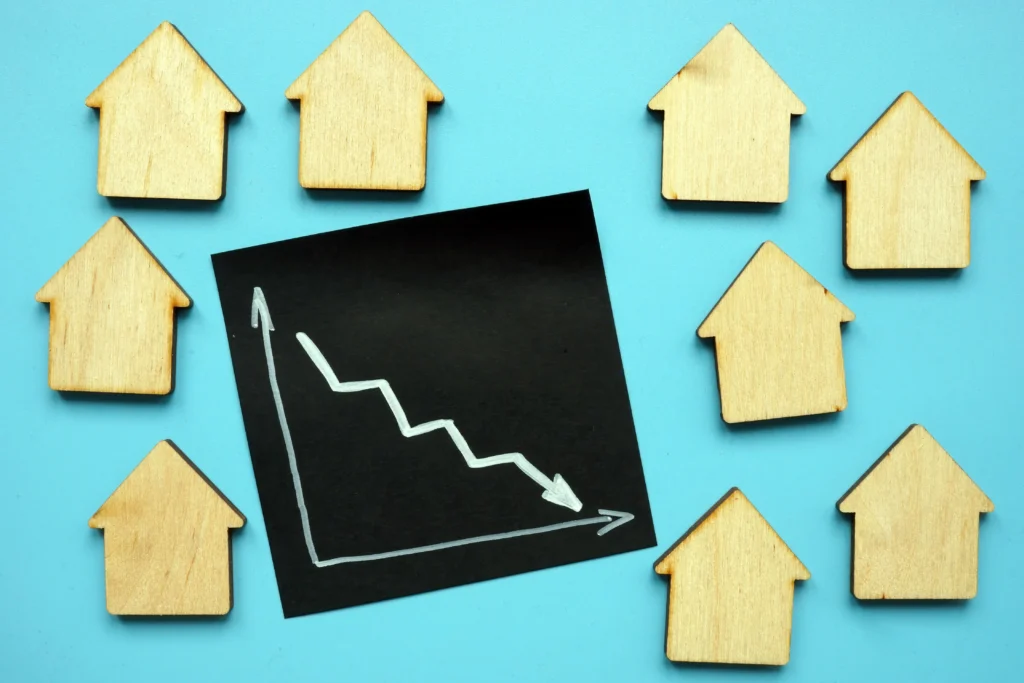
If your payoff amount is close to or higher than what the home would sell for, you’re in negative equity, and a traditional sale would require you to bring cash to closing to cover the difference.
Two things usually happen from here.
A cash sale can sometimes still work even with tight equity, because there’s no agent commission to cover and no repair costs eating into the number. It doesn’t erase negative equity. What it removes is some of the costs stacked on top of it, and that occasionally closes the gap enough to make a sale possible without cash out of pocket.
The other path is a short sale, where your lender agrees to accept less than the full payoff amount. It isn’t something you can simply decide to do on your own. The Consumer Financial Protection Bureau describes a short sale as an alternative to foreclosure that requires your lender’s approval before it can move forward, and your lender reviews your financial situation and the home’s value before agreeing to accept a shortfall.
One protection is worth knowing about here.
Under California Code of Civil Procedure section 580b, a lender generally cannot come after you for the difference on a purchase money loan, meaning the original loan used to buy the home, whether it’s foreclosed on or sold short. That protection can be lost if you’ve refinanced, particularly with a cash-out refinance, so it’s worth asking a real estate attorney whether it still applies to your specific loan.
Can You Sell If You’re Behind on Payments
Being behind on your mortgage does not stop you from selling. It changes the timeline, not the option.
Even after a Notice of Default or a Notice of Trustee Sale, California law allows a sale to close up until the moment the foreclosure auction begins. The house isn’t gone the day that notice arrives. It means the process has started and there’s a clock running, not that the outcome is decided, and plenty of sellers close well inside that window once they understand what’s happening.
If you’re behind, the arrears, meaning what you owe beyond the current payment, typically get paid off from the sale proceeds at closing the same way the rest of the payoff works. You’re not expected to bring that money separately.
What matters most here is speed. Every step, from accepting an offer to closing escrow, has to happen before the sale date on file with the trustee.
Our guide on facing foreclosure in California walks through the full timeline and what your options look like at each stage, if you want to see the whole picture beyond the payoff mechanics covered here.
Does the Type of Mortgage You Have Change Anything
No.
Whether you have an FHA loan, a VA loan, a conventional loan, or a jumbo loan, the payoff mechanics at closing work the same way, and escrow requests a payoff statement and pays it regardless of the loan type on file. FHA and VA loans follow specific payoff and assumption rules set by HUD and the VA, but for a straightforward sale where the loan is simply being paid off rather than assumed by a buyer, none of that changes what you personally need to do.
The only real difference shows up if a buyer wants to assume your loan instead of getting new financing. That’s a separate decision from selling itself, and our guide on loan assumption versus selling covers it in more depth.
Your Options for Selling With a Mortgage Still On It

You generally have three paths here: list traditionally with an agent, sell to a cash buyer, or, if you have negative equity, pursue a short sale with your lender’s approval.
A traditional listing usually nets the most if you have solid equity, time to wait for a buyer, and a home that doesn’t need major repairs. A cash sale to a company like Mrs. Property Solutions makes more sense when equity is tight, the home needs work you don’t want to pay for upfront, or you’re working against a foreclosure timeline where speed matters more than maximizing price.
If your home is in good condition and you have six months or more before any deadline, a traditional sale with an agent is usually the stronger financial move, even with the commission.
If you’re weighing your options on a house with a mortgage still attached, here’s where Mrs. Property Solutions fits in. We’re a cash home buying company founded in 2016, and we buy houses across Los Angeles, Orange, Riverside, San Bernardino, and San Diego counties, mortgage and all. We pay off the existing loan at closing the same way a traditional sale would, and you choose the closing date.
Since 2016, we’ve purchased 150+ homes and earned 50+ five-star reviews from sellers navigating exactly this kind of situation. There are no repairs to make and no commissions to pay, and the offer we make is the offer we honor.
If you want to see what your numbers look like, get a no-obligation cash offer and we’ll walk through the payoff math with you directly. There’s no pressure either way.
FAQs
Do I have to pay off my mortgage before I list my house?
No. Your mortgage is paid off automatically at closing using proceeds from the sale. You never pay it off out of pocket beforehand, and you don’t need to contact your lender to arrange the payoff yourself. Escrow requests the payoff statement and handles the transaction directly with your lender.
What’s the difference between my loan balance and my payoff amount?
Your loan balance is what your last statement shows. Your payoff amount is higher, since it includes interest accrued up to the closing date plus any fees the lender charges to process the payoff. Escrow orders this figure directly from your lender, usually valid for 10 to 30 days.
Is a cash offer on a house with a mortgage a lowball?
Not by design, though it will typically be lower than top retail price because there’s no agent commission, no repair costs, and no financing risk built in. The trade is speed and certainty for a number that reflects the home’s as-is condition rather than what it could sell for after repairs.
Can I sell my house if I’m in a short sale?
Yes, but your lender has to approve the sale first, since they’re agreeing to accept less than the full payoff. A HUD-approved housing counselor can help you through the negotiation, and it’s worth confirming in writing whether your lender will waive the right to collect the shortfall from you afterward.
Do I owe anything after selling if my lender accepts less than I owe?
It depends on your loan type. Under California Code of Civil Procedure section 580b, purchase money loans generally can’t leave you owing the difference. Refinanced loans can lose that protection. An attorney can confirm which applies to your specific loan before you agree to a short sale.
Does selling with a HELOC or second mortgage work the same way?
The mechanics are similar. Escrow pays off every recorded lien in order at closing, first mortgage, second mortgage, then any HELOC balance. Our guide on selling with a second mortgage or HELOC in California covers the payoff order and what happens if the combined balance is close to your sale price.
How long is a mortgage payoff statement valid for?
Most payoff statements are valid for 10 to 30 days, depending on the lender. If your closing date shifts past that window, escrow simply requests an updated statement, since the payoff amount changes daily as interest accrues. This is routine and doesn’t typically delay closing.
Disclaimer: This article explains how selling a house with a mortgage generally works in California. It isn’t legal or financial advice, and short sale terms, deficiency protections, and foreclosure timelines vary by lender, loan type, and county. Talk to a real estate attorney or HUD-approved housing counselor about your specific situation.
Helpful Resources
- Selling without a realtor
- What Happens If You Stop Paying Property Taxes in California?
- How to Sell a House With a Second Mortgage or HELOC in California