

Most cash home buyers in Los Angeles County are legitimate, and the scams that do happen follow a short list of patterns: a high offer that drops right before closing, a request to sign the deed before you’re paid, an escrow company the buyer controls, and pressure to decide fast. A real buyer closes through licensed escrow.
TLDR
- The most common cash buyer scams in Los Angeles are the last-minute price drop, the deed-before-payment request, the overpayment refund, fake escrow or changed wire instructions, and the forged deed.
- A legitimate cash buyer closes through a neutral, licensed escrow or title company, where the deed and the money change hands at the same time.
- Proof of funds should come from a bank, be recently dated, and carry the same name as the buyer on the purchase contract.
- California Civil Code 1695.4 lets a homeowner in foreclosure cancel a sale contract with an equity purchaser until midnight of the fifth business day after signing.
- Los Angeles County homeowners can sign up for free notices whenever a deed or loan is recorded against their property.
Getting a text or a handwritten letter from someone who wants to buy your house for cash can feel flattering and suspicious at the same time, and both reactions make sense. You never listed the house, you’ve never met this person, and they already seem to know a lot about your property.
Most of the time, that person is exactly who they say they are, an investor who buys houses and fixes them up. But a cash sale skips the lender, the appraiser, and often the real estate agent, and those are the people who normally catch a bad deal before it closes. Take them out and the checking falls to you.
The good news is that nearly every scam falls apart the moment a seller asks for three things: licensed escrow, proof of funds, and time to read the contract.
Are Cash Home Buyers Legit, or Is It a Scam?

Most cash home buyers are legitimate businesses, and the problems sellers run into split into two very different groups. The first is outright fraud, like a forged deed or a fake cashier’s check, which is a crime and belongs with the police. The second is legal but bad-faith behavior, like an offer written high to lock up the house and then cut down before closing. That second group is the one to watch for when you read reviews and complaints about a company, because it rarely makes the news and it still costs sellers plenty.
Fraud can take the house itself, while bad faith usually costs you weeks, the other buyers you turned away, and your bargaining position.
Five Cash Buyer Scams That Show Up in Los Angeles County
Fake cash buyers and bad-faith ones lean on the same handful of moves, and each one falls apart when the seller insists on a neutral escrow company and written terms.
The high offer that drops before closing
The buyer offers more than anyone else, sometimes more than you expected, and asks for a long inspection period. You take the house off the market and tell the other buyers no. Then, a few days before closing, the buyer “finds” a foundation problem or a roof issue and asks for a big price cut, knowing you’ve already turned everyone else away and may have already booked the movers.
The tell is a number that seems too high for the condition, paired with a contract that lets the buyer walk away for almost any reason.
In 2024, Mrs. Property Solutions bought a Burbank house that two out-of-state sisters had inherited in probate. It had serious foundation problems, and the offer priced those problems in before anyone signed, so there was nothing left to “discover” later. The sale closed in 21 days, and the check the sisters received matched the original offer to the dollar. A buyer who walks the house and prices the repairs up front has no reason to renegotiate at the end.
“Sign the deed now, we’ll pay you after”
The buyer asks you to sign a grant deed or a quitclaim deed before the money is in escrow, usually with a friendly reason like starting repairs early. Once that deed is recorded, you no longer own the house, and getting it back can take a lawsuit. Some versions ask you to move out first so the buyer can “get started.”
No legitimate buyer needs your deed before closing.
The overpayment refund
The buyer sends a check or a wire confirmation for more than the agreed price and asks you to send back the difference. The original payment later turns out to be fake, and the money you sent is gone. It feels harmless because you’re only returning money that was never yours, and that is exactly why it works. A real sale pays you once, through escrow, for the agreed price.
Fake escrow and changed wire instructions
Some scammers build a convincing escrow website of their own, and others break into a real escrow officer’s email and send “updated” wiring instructions. The California Department of Real Estate warns that criminals “hack into email accounts of real estate professionals or escrow officers and impersonate them,” and its advice is to verify payment instructions by phone.
Call the escrow office at a number you found yourself, never the number in the email.
The forged deed
Deed fraud, sometimes called title fraud, is when someone forges your signature or poses as you to record a deed moving your property into their name. An empty or inherited house is at extra risk because nobody is there to see the mail, and the free Los Angeles County alert program covered below is the simplest defense.
Real Estate Fraud Losses Nearly Doubled in Two Years
The FBI’s Internet Crime Complaint Center counted 12,368 real estate fraud complaints and $275,110,419 in reported losses in its 2025 annual report, up from $145,243,348 in 2023. California led every state in both complaints and losses across all internet crime that year. Those figures only count the people who filed a report.
How to Check a Cash Buyer Before You Sign
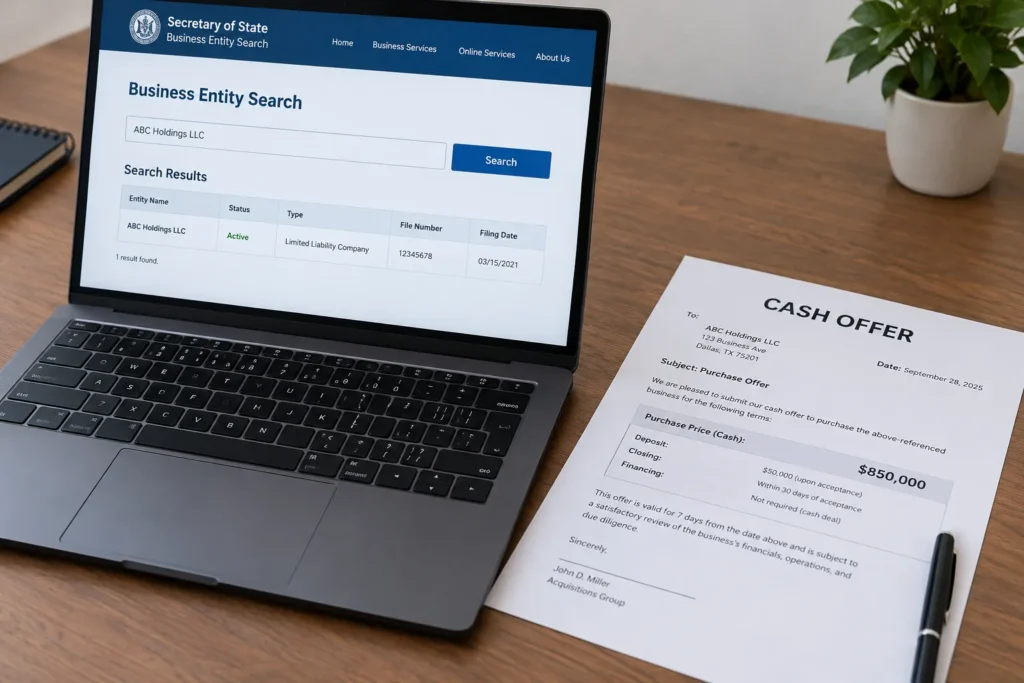
A legitimate buyer expects to be checked and will hand over everything below without a fight. Pushback on any of it is your answer.
| What to check | Where to check it | What a good answer looks like |
| The business is registered | The California Secretary of State business search | An active entity whose name matches the one on your contract |
| Proof of funds | Ask the buyer | A bank statement or bank letter, recently dated, in the buyer’s own name |
| Who is buying | Ask the buyer directly | A clear written answer on whether they will buy it themselves or assign the contract |
| The escrow company | DFPI at 1-866-275-2677, or the title company’s own website | A licensed company you can reach at a number you found yourself |
| Reviews and complaints | Google, plus a search of the company name with the word “complaints” | Several years of reviews from sellers describing real sales |
| Any license they mention | The California Department of Real Estate license lookup | A match, if they say they are an agent or broker |
Proof of funds deserves a closer look than most sellers give it. A screenshot of an account balance, a letter with no date, or a statement in a different company’s name than the one on your contract doesn’t prove much. Ask for the name on the statement to match the name on the purchase agreement, and ask that it be dated within the last month or so. If the buyer says the money is coming from a partner, ask who that partner is and whether they’re named on the contract.
The words “and/or assigns” after the buyer’s name mean the buyer can hand the contract to another investor, who then does the buying. Some sellers are fine with that and some aren’t, but either way you deserve to know up front who will be at the closing table, so ask plainly and get the answer in writing.
Red Flags Hiding in a Cash Offer Contract
The purchase agreement is where a bad-faith buyer builds in room to change the deal later, so read it before you sign and look for these:
- An inspection or “due diligence” period of several weeks, especially when the buyer has already walked through the house
- A contingency that only helps the buyer, like “subject to partner approval”
- “And/or assigns” after the buyer’s name with no conversation about it
- A very small earnest money deposit, the good-faith money a buyer puts into escrow, paired with a long closing timeline
- No escrow or title company named, or one you can’t find on your own
- A closing date the buyer can keep pushing back without your written consent
None of these alone proves a scam, and plenty of fair contracts include one or two. Put several together, though, and you have a buyer who can keep your house off the market while risking very little. A real estate attorney can review a purchase agreement before you sign, and that fee is small next to the price of the house.
Never Sign the Deed Until the Money Is in Escrow
In California, a normal home sale closes through escrow, a neutral third party that holds the buyer’s money and the seller’s signed deed until every condition in the contract is met, and then releases both at the same time. The escrow officer works for the transaction, not for either side. That structure is the whole reason a sale to a stranger can be safe, and a buyer who wants to skip it “to save time” is asking you to give up the one protection that makes it work.
You can suggest your own escrow or title company, and you can call the office yourself before you sign anything to confirm the file is open under your address. Independent escrow companies in California are licensed by the Department of Financial Protection and Innovation, which confirms licenses at 1-866-275-2677.
Behind on Your Mortgage? California Gives You Time to Cancel
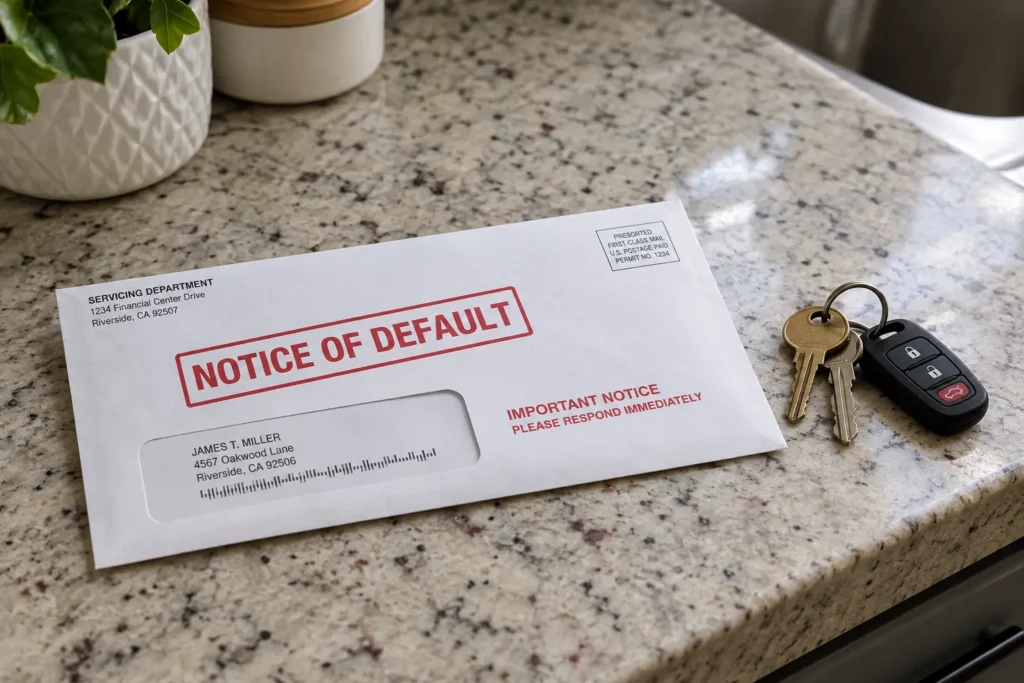
California’s Home Equity Sales Contracts Act adds protection for homeowners in foreclosure who are approached by buyers. Under Civil Code 1695.1, it covers a one-to-four unit property where the owner lives in one of the units as a primary home and a Notice of Default, the first formal foreclosure notice, has been recorded. In that situation, Civil Code 1695.4 lets the seller cancel a contract with an equity purchaser, the law’s term for someone buying a home in foreclosure, until midnight of the fifth business day after signing or until 8 a.m. on the day of the scheduled foreclosure sale, whichever comes first.
The cancellation has to be in writing and delivered to the address listed in the contract.
If you signed while facing foreclosure and now feel rushed, call a real estate attorney or a HUD-approved housing counselor before that window closes, and read through your options before foreclosure so a sale isn’t the only path you’ve considered.
Los Angeles County Will Alert You When a Deed Is Recorded
Los Angeles County runs a free recorded document alert program called the Homeowner Notification Program, and it sends owners copies of recorded documents that show an ownership change like a grant deed or quitclaim deed, a new loan against the property, or a Notice of Default or Notice of Sale. The county Department of Consumer and Business Affairs runs it, owners can add email alerts through the Assessor’s e-Notification portal, and questions go to (800) 593-8222.
If you’ve inherited a house that sits empty, or you live far from the property, this is worth doing before anything else on this list.
What to Do If Something Already Feels Wrong
Stop before you sign anything else or send any money, and call the escrow company at a number you looked up yourself. If you’ve already signed a deed you now doubt, or you’ve found a document recorded against your house that you never signed, call a real estate attorney the same day. And if you wired money, call your bank right away, because the sooner a bank hears about fraud, the better the chance of stopping the transfer.
Then report it:
- Online and wire fraud goes to the FBI at ic3.gov
- A licensed agent or broker can be reported to the California Department of Real Estate
- The Los Angeles County Department of Consumer and Business Affairs takes calls at (800) 593-8222
- If money or a deed changed hands, file a police report too
Is a Cash Sale the Right Fit at All?
Checking the buyer is half the decision, and the other half is whether selling for cash makes sense for your house in the first place. If the house is in good shape and you have a few months, listing with an agent will usually net you more, and our guides on selling as-is for cash and weighing an investor sale walk through both sides.
Want to Run These Checks on Us?
If you’ve read this far, you probably have an offer in front of you, or you’re expecting one, and you want to know who you’re dealing with before you sign.
Mrs. Property Solutions is a mom-and-pop cash home buyer based in Pasadena, and we buy houses across Los Angeles County as-is, through licensed escrow, with a closing date you choose. Run every check in this guide on us, and we’ll send you proof of funds and the escrow details before you sign anything, whether your house needs a lot of work or you’d simply rather be selling without an agent.
Since 2016 · 150+ homes purchased · 50+ five-star reviews · Local to LA County · No repairs, no agent commissions · The offer we make is the offer we honor
You can request a cash offer online, call us at (626) 344-9579, or read more about who we are first. There’s no obligation, and if a cash sale isn’t the right fit for you, we’ll say so.
Frequently Asked Questions
Are cash home buyers legit?
Yes, most cash home buyers are real investors who buy with their own money or a private lender’s, and they close through escrow like any other sale. The ones to avoid ask for your deed early, steer you away from licensed escrow, or push you to sign the same day you meet them.
How can I tell if a “we buy houses” company is a scam?
Check the company on the California Secretary of State business search, ask for proof of funds in its own name, and confirm the escrow company yourself. A company that refuses any of these, asks you for money upfront, or pressures you to sign quickly is showing you a red flag.
Can a cash buyer lower the price after we sign a contract?
A buyer can ask for a lower price at any time, but a seller does not have to accept it. If the contract has a long inspection period or loose contingencies, the buyer may be able to cancel instead, which is why those terms deserve a careful read before signing.
What does “and/or assigns” mean in a cash offer contract?
“And/or assigns” means the buyer can transfer the contract to someone else, who then completes the purchase. Ask the buyer directly whether they plan to buy the house themselves or assign it, and get the answer in writing, so you know who will be at the closing table.
What proof of funds should a cash buyer show me?
Proof of funds should be a recent bank statement or a letter from the bank, dated within about the last month, in the same name as the buyer on your contract. A screenshot, an undated letter, or a statement in someone else’s name does not show that this buyer can close.
Should a cash buyer ever ask me to pay a fee upfront?
No, a seller should not pay a cash buyer an application fee, a processing fee, or any other charge before closing. Legitimate closing costs are itemized by escrow and settled at closing. The California Department of Real Estate warns homeowners facing foreclosure to reject any upfront fee demand.
Where do I report a real estate scam in California?
Report online and wire fraud to the FBI at ic3.gov, report a licensed agent or broker to the California Department of Real Estate, and call the Los Angeles County Department of Consumer and Business Affairs at (800) 593-8222. If money or a deed changed hands, also file a police report and call an attorney.
Is Mrs. Property Solutions a legitimate cash home buyer?
Yes, Mrs. Property Solutions is a cash home buying company founded in 2016 by Cristina Ortega and based at 1100 Riviera Drive in Pasadena. It has purchased 150+ homes, has earned 50+ five-star reviews, and closes through licensed escrow. Sellers are welcome to run every check in this guide on it first.
Disclaimer: This article explains how cash home sales and related consumer protections generally work in California. It isn’t legal advice, and the rules depend on your situation. Talk to a real estate attorney about your specific contract, especially if your home is in foreclosure.