
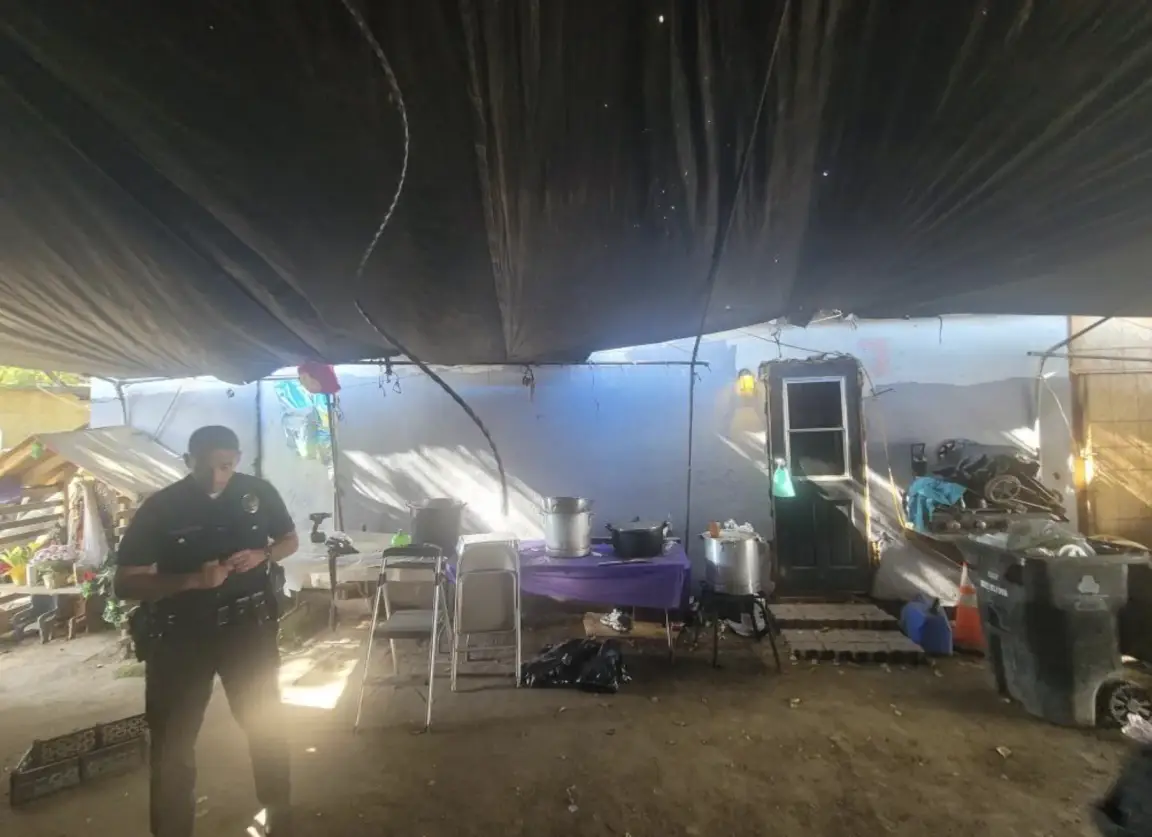
If squatters are living in your Los Angeles County property, call the local police first and ask them to remove the occupants as trespassers. If the occupants claim a right to be there, California requires a court eviction called an unlawful detainer. Squatters almost never gain ownership, because adverse possession requires five years of occupancy and paid property taxes.
TLDR
- Squatters in California can only claim ownership through adverse possession, which requires five continuous years of occupancy plus payment of every property tax bill assessed during that time.
- Police in Los Angeles County can remove a trespasser, but once an occupant claims a lease or permission to be there, officers usually treat it as a civil matter for the courts.
- Changing the locks, cutting utilities, or removing an occupant’s belongings can backfire, because California Civil Code section 789.3 allows damages of $100 a day if the occupant turns out to have tenant rights.
- A court eviction in California runs 30 to 45 days or more from serving papers to move-out, and since January 2025 occupants get 10 court days to respond instead of five.
- An owner can sell a Los Angeles County house with squatters still inside, but most buyers using a mortgage need it empty, so the evict-first decision comes down to time, cost, and who the buyer is.
Most owners find out about squatters the same way, with a call from a neighbor who noticed lights on in a house that is supposed to be empty, or a car in the driveway nobody recognizes. By the time you drive over, or fly in because the house was your mom’s and you live three states away, someone has moved furniture in and hung a sheet over the front window.
It’s a sick feeling, and the anger that comes right after it is completely fair.
You’re the one paying the property taxes and the insurance, and a stranger is sleeping in the bedroom. This guide covers what squatters can and can’t claim under California law, who to call in Los Angeles County, what to avoid even when you’re furious, and how to decide whether to evict before you sell or sell with the occupants still inside.
Squatters’ Rights in Los Angeles Are Narrower Than You’ve Heard
Squatters in Los Angeles have almost no path to owning your house, and what people call squatters’ rights is mostly the right to be removed through a legal process instead of by force.
The ownership route is adverse possession, and California makes it hard on purpose. Under California’s adverse possession statute, Code of Civil Procedure section 325, someone has to occupy the property continuously for five years and pay all of the state, county, and city property taxes assessed on it during that time, proven with the county tax collector’s records. An owner who keeps paying the tax bill leaves a squatter’s claim with nowhere to go.
The five-year clock is not the part that should worry you.
What should worry you is the process. Once someone has moved in and claims a right to be there, whether that’s a handwritten lease, a story about a relative who said they could stay, or a utility bill in their name, California treats the question of who gets possession as a matter for the courts. That is where the time and the cost come from, and it’s why what you do first matters so much.
Lawmakers have tried to change this. SB 448, the Trespassing Response and Remedies Act introduced in February 2025, would have let owners serve a demand to vacate and ask law enforcement to remove squatters directly, and AB 897 proposed citations for anyone living in a home without the owner’s consent. Neither became law. AB 897 stalled in committee in May 2025 and SB 448 died in the Senate in February 2026, so as of 2026 squatter removal in Los Angeles County still runs through the police first and the courts second.
Squatter, Trespasser, or Tenant: The Label Decides Who Removes Them
In California, whether the police can remove an occupant or the owner has to go to court depends on whether the person is treated as a trespasser, a squatter claiming possession, or a tenant.
| Who is in the house | What it usually looks like | Who removes them |
| Trespasser | Just got in, no belongings to speak of, no claim to be there | Police, under California Penal Code section 602 |
| Squatter claiming possession | Moved in, claims a lease or permission, has mail or furniture there | Usually the court, through an unlawful detainer case |
| Tenant or former tenant | Had a real rental agreement at some point, even an informal one | The court, with full eviction rules and, in the City of Los Angeles, local tenant protections on top |
Former tenants who stopped paying and relatives who were told they could stay for a little while fall into that last row, even when it feels like squatting. The rules for them are different enough that they’re covered separately in the guide to selling with tenants in place.
Who to Call When You Find Squatters in LA County
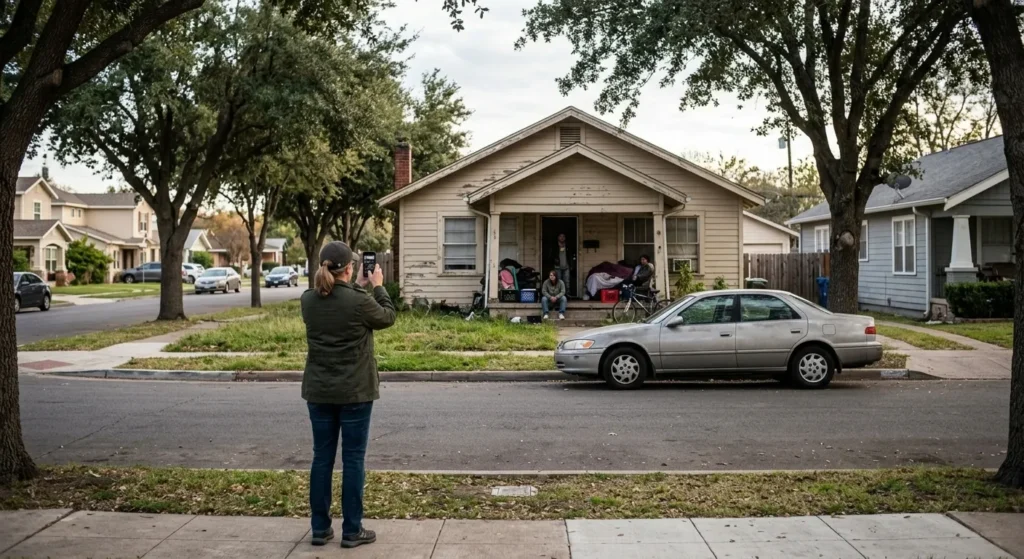
Call the police agency that covers the property’s address and ask for an officer to meet you there about a trespass, and call 911 only if someone is in danger.
Inside the City of Los Angeles that’s LAPD, which takes non-emergency calls at 1-877-ASK-LAPD (1-877-275-5273). Unincorporated areas and cities that contract with the county, Compton among them, are covered by the local Los Angeles County Sheriff’s station, and cities like Pasadena, Long Beach, and Glendale have their own police departments.
Before and during that call:
- Bring proof you own the property, like the grant deed or a recent property tax bill, along with your ID.
- Photograph the outside of the house from the street, including any cars and license plates, without going inside or confronting anyone.
- Write down when you last visited and when anyone last lived there legally, because the officer will ask how long the occupants have been there.
- Ask the officer directly whether they can remove the occupants for trespass today, and if the answer is no, get the incident or report number.
- Keep every note, text, or document the occupants give you, including any lease they show, since it becomes evidence if this goes to court.
If the house sits empty, it’s worth filing a trespass authorization, often called a 602 letter, with the local police before anything happens. Since SB 602 took effect in 2024, California Penal Code section 602 lets an owner submit a notarized request on the police department’s own form that stays valid for up to 12 months instead of 30 days, which gives officers standing permission to act when you’re not there. In Los Angeles, LAPD takes these at the community police station that covers the property, and they have to be renewed every year.
What Not to Do, Even Though It’s Your House
Don’t change the locks, cut the utilities, take the doors off, or throw out the occupants’ belongings, even though every instinct you have says to.
Those moves feel like taking your house back, but in California they’re the fastest way to turn a squatter problem into a claim against you. If a judge later decides the occupant had tenant rights, Civil Code section 789.3 allows them to recover the greater of $250 or $100 for every day they were locked out or had their utilities shut off, plus other damages.
Walking into the house to confront people is a separate risk to your own safety, and nothing inside that property is worth getting hurt over.
Let the police or the sheriff do the removing.
When Police Won’t Remove Them, the Court Does

When the police won’t remove squatters in Los Angeles County, the owner files an unlawful detainer, which is the court case California uses to decide who has the right to possess a property.
In broad strokes, the owner serves written notice, files the case in Los Angeles County Superior Court, and has the occupants served. Since January 1, 2025, AB 2347 gives occupants 10 court days to respond instead of five, with weekends and court holidays not counted.
If the owner wins, the court issues a writ of possession, and the Los Angeles County Sheriff’s Department serves it and gives the occupants five days to leave before it carries out the lockout. The California Courts eviction guide puts the whole process at 30 to 45 days or more from serving the papers to the move-out date, and contested cases run longer.
One detail matters more with squatters than with tenants, because you often don’t know everyone’s name. Serving a Prejudgment Claim of Right to Possession with the court papers, which Code of Civil Procedure section 415.46 allows, gives any unnamed occupant a set window to come forward, and anyone who doesn’t can be removed under the same judgment instead of forcing a second case.
Each filing, the notice types, and what happens at the hearing are laid out in the step-by-step squatter eviction guide.
Should You Evict Squatters Before Selling in Los Angeles County?

You don’t have to evict squatters before selling a Los Angeles County house, but whether you should depends on who your buyer is and how long you can keep carrying the property.
Most buyers using a mortgage need the house delivered empty, because their lender, appraiser, and inspector need access and the buyer needs to be able to move in. So if you want to list with an agent and reach the most buyers, the eviction usually comes first, and the court time, attorney fees, repairs, and months of taxes and insurance all come out of your pocket before you see an offer.
On an $800,000 house, the 5% to 6% commission on a traditional sale adds another $40,000 to $48,000 at closing.
| Path | When it makes sense | The trade-off |
| Evict, then list with an agent | The house is in decent shape, the occupants leave after a police visit or a short court case, and you can carry the costs for a few months | Court time and carrying costs up front, plus a 5% to 6% commission at closing |
| Cash for keys, then sell | The occupants are willing to negotiate and you’d rather skip court | You pay people who never should have been there, and it only works with a signed agreement |
| Sell with the occupants inside | You live out of state, the house also needs major work, or the carrying costs are more than you can keep paying | The buyer prices in the removal, so the offer is lower than the house would bring empty and listed |
Here’s the honest version. If the house is in good condition and the occupants leave after one police visit, listing with an agent will almost always put more money in your pocket than selling to any cash buyer, Mrs. Property Solutions included. If you want to skip the agent either way, here’s what selling without an agent involves.
Cash for keys is something owners can offer themselves, and it’s often faster than winning in court. A Compton house Mrs. Property Solutions bought had been damaged in a fire, and squatters moved in afterward. Rather than start a court case that could have stretched on for months, the occupants were paid directly to leave, the house was boarded up right after they walked out, and the sale closed in about two weeks. What made it work is the part any owner can copy: a written agreement with a firm move-out date, and payment only once the house is empty and the keys are in hand.
Selling occupied makes the most sense when the eviction itself is the thing you can’t face, because you’re managing it from another state, the house needs work you were never going to do, or you inherited the problem along with the property. If the people inside are former tenants rather than strangers, selling a problem rental works a little differently.
Once the House Is Empty Again
Squatters look for houses that seem empty, so the weeks right after they leave are when a house is most likely to get hit again. Once you legally have possession back, change the locks, secure any broken windows or doors, keep a few lights on timers, and ask a neighbor to call you if anything looks different. The guide to securing a vacant house covers the rest.
If Selling As-Is Makes More Sense for You

If you’ve read all of this and a court case, a lockout, and a cleanup from another state sounds like more than you want to take on, that’s a completely reasonable place to land.
Mrs. Property Solutions buys Los Angeles County houses as-is with occupants still inside, handles the removal ourselves, and you choose the closing date. Since 2016, Cristina Ortega and her team have bought 150+ homes across Southern California and earned 50+ five-star reviews. We’re local to LA County, there are no repairs and no commissions, and the offer we make is the offer we honor.
You can request a written offer online or call (626) 344-9579, and there’s more on buying houses across Los Angeles if you want to see how it works first. Asking for an offer doesn’t commit you to anything, and if evicting first and listing is the better move for your house, we’ll tell you that.
Frequently Asked Questions
Can squatters get ownership of my house in California?
Rarely. Under Code of Civil Procedure section 325, a squatter has to occupy the property continuously for five years and pay all property taxes assessed during that time, proven by county tax collector records. An owner who keeps paying the property tax bill blocks that claim, even if removing the occupants takes months.
How do I report squatters in Los Angeles?
Call the police agency that covers the address. Inside the City of Los Angeles that’s LAPD at 1-877-ASK-LAPD. Unincorporated areas and contract cities like Compton use the local Los Angeles County Sheriff’s station, and cities like Pasadena and Long Beach have their own police. Call 911 if anyone is in danger.
Can police remove squatters in Los Angeles?
Sometimes. Police can remove a trespasser under California Penal Code section 602, especially when the owner has a current trespass authorization on file. Once an occupant claims a lease or permission to be there, officers usually treat it as a civil dispute, and the owner has to file an unlawful detainer case in court.
How long does it take to get squatters out in Los Angeles County?
Anywhere from one day to several months. A police removal for trespass can happen the same day. A court eviction takes 30 to 45 days or more from serving the papers to move-out, according to the California Courts self-help guide, and contested cases in Los Angeles County Superior Court often take longer.
Can I turn off the utilities to make squatters leave?
No. Shutting off utilities, changing the locks, or removing belongings can backfire in California. If a judge decides the occupant had tenant rights, Civil Code section 789.3 allows damages of $250 or $100 for each day of the violation, whichever is greater. Let the police or the sheriff handle removal.
Do I have to evict squatters before selling my house in Los Angeles?
No. California lets an owner sell a house with occupants still inside, but most buyers using a mortgage need it delivered empty. Owners who want to list with an agent usually evict first, and owners who can’t manage an eviction from a distance often sell as-is to a buyer who takes over the removal.
Will a cash buyer pay less for a house with squatters in it?
Yes, usually. A buyer who takes on the removal prices in the court time, legal costs, and repair risk, so an offer on an occupied house is typically lower than what the same house would bring empty and listed. In exchange, the seller skips the eviction, the carrying costs, and the cleanup.
Disclaimer: This article explains how squatter removal and adverse possession generally work in California as of 2026. It isn’t legal advice, and procedures vary by city and by situation. Talk to a California real estate or landlord-tenant attorney before serving notices or filing an eviction.
Helpful Resources
- Selling a rental property with problem tenants in California
- Selling without a realtor
- How to Sell a House With Tenants in California (Legal Steps)