

When a buyer’s mortgage falls through before closing in Los Angeles, get the lender’s reason in writing, check whether the buyer already removed the loan contingency, and decide whether a short written extension can save the deal. If it can’t, the realistic options are a backup offer, relisting, or a cash sale.
Key Takeaways
- A late mortgage denial usually comes from a change in the buyer’s credit, job, debts, or paperwork, or from a low appraisal, and the reason shows whether a few extra days can fix it.
- Whether a California seller keeps the buyer’s deposit depends on whether the buyer removed the loan contingency and whether both parties initialed the liquidated damages clause.
- Escrow releases a disputed deposit only when both buyer and seller sign release instructions, or when a court or arbitrator decides.
- When the deal can’t be saved, a seller can go to a backup offer, relist, or sell for cash, and cash is usually the wrong choice when the house shows well and there’s no deadline.
The boxes are taped, the movers are booked for Saturday, and on Thursday afternoon your agent calls to say the buyer’s lender won’t fund the loan. Nothing is wrong with your house, and the sale is coming apart anyway over something happening in a stranger’s bank account.
It happens more often than most sellers expect. In the National Association of REALTORS® Realtors Confidence Index for March 2026, agents reported that 5% of contracts were terminated and 13% had delayed settlements over the previous three months.
The first two days are when you find out whether this buyer can still close and where you stand on their deposit, and getting both answers early keeps your own next move from running on guesses.
Get the Lender’s Reason in Writing First
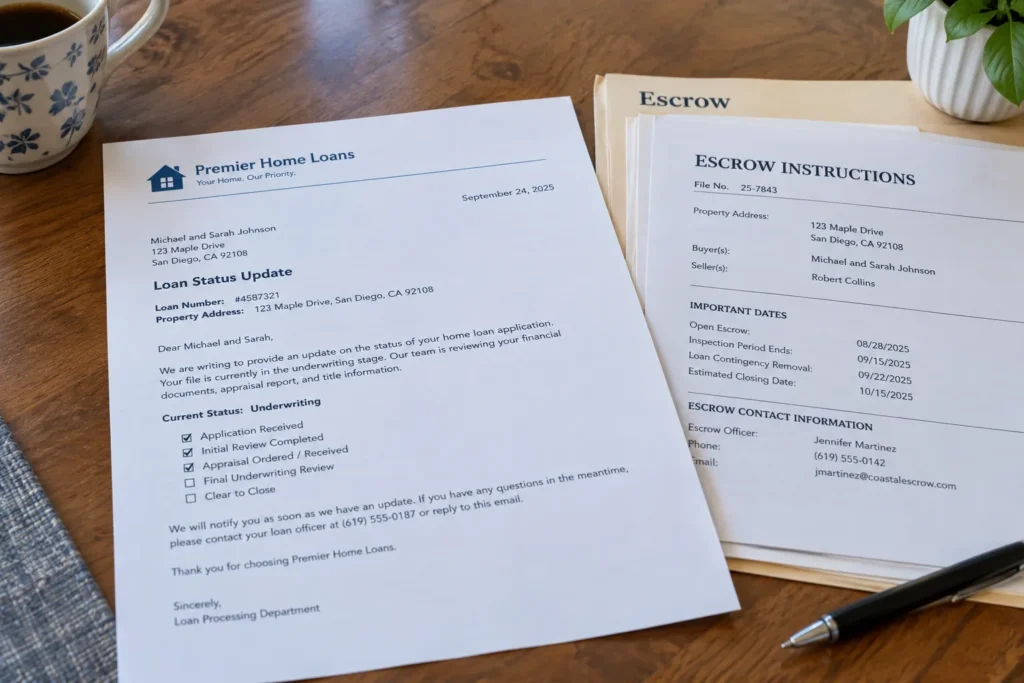
Ask for the reason the loan failed, in writing, from the buyer’s lender or the buyer’s agent. “The loan didn’t go through” tells you nothing, and “the buyer’s new car payment pushed their debt ratio over the limit” tells you almost everything.
Have your agent request a written denial or status update from the buyer’s loan officer, and have escrow note the date in the file. That paper matters if the deposit ends up in dispute. Then call whoever is waiting on your side of this sale. If your own purchase, your movers, or a new lease depends on this closing date, they should hear about it today, while there’s still room to move their dates too.
Why a Buyer’s Loan Falls Apart in the Final Week
Most last-minute denials trace back to something that changed on the buyer’s side after approval, because lenders check again right before funding. The Consumer Financial Protection Bureau notes that a lender may run a new credit check just before closing, which is exactly when a new car loan or a missed payment during escrow shows up.
| Reason | What usually happened | Can a short extension help? |
| New debt or a credit drop | The buyer financed a car, opened a card, or missed a payment | Sometimes, if paying off the debt or changing loan programs fixes the numbers |
| Job or income change | The final employment check didn’t match the application | Less likely, since the lender often needs new income history |
| Low appraisal | The appraiser valued the house below the price and the buyer can’t cover the gap | Often, if the price changes or the buyer brings more cash |
| Missing or inconsistent paperwork | Bank statements, tax returns, or gift letters didn’t line up | Usually, if the buyer responds quickly |
| Lender or underwriting problem | A funding delay, a new underwriter, or an internal error | Often, with a few days or a move to a new lender |
A low appraisal is a price question and the other four are buyer questions, which is why the reason decides your next step, and the price side has its own guide on what a low appraisal means.
The Loan Contingency Decides Who Keeps the Deposit

In a California home sale, the buyer’s deposit, also called earnest money, is the good-faith check that goes into escrow when the offer is accepted. The loan contingency is the clause that lets the buyer cancel and get that money back if their financing fails within the time the contract allows.
What decides almost everything is whether the buyer signed a contingency removal for the loan before the lender said no.
If they didn’t, and the contingency period is still open, the buyer can usually cancel and recover the deposit. If they did remove it and can’t close, they are generally in breach, and the liquidated damages clause decides what the seller recovers.
That clause only counts when both parties separately initialed it and it’s printed in the required bold type, under Civil Code section 1677. For a home of one to four units the buyer planned to live in, Civil Code section 1675 presumes it’s valid when the amount kept is no more than 3% of the price, or $28,408.50 at the Los Angeles County median sold price of $946,950 for August 2026 reported by the California Association of REALTORS®.
Even then, escrow releases the deposit only when both buyer and seller sign release instructions, under Civil Code section 1057.3, so a disputed deposit sits in escrow until the two sides agree or a mediator, arbitrator, or judge decides.
The same rules cover a buyer backing out for other reasons. Before you refuse to sign a cancellation or a release, have a real estate attorney read your contract.
Can the Sale Be Saved With a Few More Days?
Sometimes it can, and the written reason tells you which kind of problem you have. A paperwork gap or a slow underwriter is often fixable in days, and a buyer who just lost a job usually isn’t.
If you’re willing to wait, put it in writing. Your agent can prepare an extension addendum with a new closing date, and before you sign it, ask for the buyer’s loan officer’s name and number, a written update on what’s still missing, and a new pre-approval if the buyer is switching lenders. A verbal “we just need a few more days” gives you nothing to hold anyone to.
Waiting has a cost too, since every extra week is another mortgage payment, property taxes, insurance, and utilities on a house you’re trying to leave.
If the buyer is still inside the loan contingency period and goes quiet, California purchase contracts use a written Notice to Buyer to Perform, which gives the buyer a short window to act before the seller can cancel, with the exact timing set by your contract.
When Your Next Home Depends on This Sale
A failed buyer loan hits hardest when your own purchase in Los Angeles is contingent on this sale, because two escrows are now running on the same clock. Call the agent and escrow officer on your purchase the same day, before your own contingency deadlines pass.
Some sellers can get more time from the seller of their next home, some can switch to a bridge loan, and some have to choose between saving the purchase and saving the sale. Talk that choice through with your agent and your own lender before you sign anything on either contract.
Your Options if the Sale Can’t Be Saved

Once it’s clear this buyer can’t close, a Los Angeles seller has three realistic paths, and each one fits a different situation.
Go to your backup offer. If you had more than one offer the first time, have your agent call the runner-up before relisting. They already know the house, and if their lender has already reviewed their income and credit, they can sometimes finish near the original timeline. Be upfront about why the first deal fell apart, since their agent will ask.
Relist on the MLS. When the house showed well and drew real interest, relisting is usually the path to the highest price, and it fits best when you have time and aren’t carrying two housing payments. The selling costs are the same as the first time, including an agent commission of 5% to 6%, which is $47,347.50 to $56,817 at the August 2026 county median, plus the seller’s share of closing costs. If showings slow down, there are specific things to adjust before you cut the price.
Sell for cash. A cash buyer skips the lender and the appraisal, so the problem that ended your sale can’t happen again. The trade-off is price, since a cash offer is usually lower than what a financed buyer would pay, and that gap is what certainty and selling without repairs are worth to you. If you’re still under a listing agreement, read it first, because many owe your agent a commission on any sale during the listing period, even one made directly without an agent.
Cash is usually the wrong call when your house is in good shape, you don’t have a deadline, and the first showings brought real interest.
It makes more sense when time is the problem, when you’re carrying a second housing payment, or when the house needs work the next buyer’s inspection will flag, which is where selling as-is in Los Angeles changes the math.
How to Screen the Next Buyer’s Financing
The best protection against a repeat is asking harder questions before you accept the next offer. A pre-approval, where a lender has reviewed the buyer’s income, assets, and credit, carries more weight than a pre-qualification based mostly on what the buyer said.
With any financed offer, ask your agent to do four things:
- Call the buyer’s loan officer before accepting and ask what has been verified so far.
- Look at how much cash the buyer has beyond the down payment, since extra cash can cover a low appraisal.
- Keep the loan contingency period as short as the buyer’s lender can realistically support.
- Keep a backup offer in place if you get more than one.
A buyer who resists any of these is telling you something useful before you’ve taken the house off the market.
If You’d Rather Not Go Through Escrow Again
If you’re not sure you want another round of showings and another buyer’s lender, that’s a fair thing to feel. Mrs. Property Solutions is a local LA County buyer that purchases houses directly with cash, so there’s no loan to fall through and no appraisal to wait on.
Since 2016 we’ve bought 150+ homes across Southern California and earned 50+ five-star reviews. You don’t make repairs, we don’t charge commissions, you choose the closing date, and the offer we make is the offer we honor, with no renegotiating after earnest money goes into escrow.
Call us at (626) 344-9579 or visit our Los Angeles page if you’d like to see a cash offer next to your other options. There’s no obligation, and if relisting is the better move for you, we’ll tell you that.
Frequently Asked Questions
Can the seller keep the earnest money if the buyer’s loan is denied in California?
Sometimes. If the buyer already removed the loan contingency and then fails to close, the seller may keep the deposit under a liquidated damages clause both parties initialed, which Civil Code 1675 presumes valid up to 3% of the price for an owner-occupant buyer. If the contingency was still open, the buyer usually gets the deposit back.
How long should a seller give a buyer to fix a mortgage problem?
Most sellers give anywhere from a few days to a couple of weeks, depending on why the loan failed. Paperwork gaps and slow underwriting can often be fixed quickly, while a job loss usually can’t. Any extension in California should be a signed addendum with a new closing date and a written update from the buyer’s lender.
Can a seller cancel escrow if the buyer’s financing falls through?
Yes, in most cases, but the steps matter. If the buyer is still within the loan contingency period, California purchase contracts generally require a Notice to Buyer to Perform before the seller can cancel. Cancelling takes signed escrow instructions, so work through your agent and escrow officer, and call an attorney if the buyer disputes it.
Why is the deposit stuck in escrow after the sale fell apart?
Escrow holds the deposit until both buyer and seller sign release instructions or a court or arbitrator decides. Under California Civil Code 1057.3, refusing to sign for 30 days after a written demand, without a good-faith dispute, can cost three times the amount withheld, between $100 and $1,000, plus attorney’s fees.
Does relisting after a failed escrow hurt the sale price?
Not necessarily. A sale that failed because of the buyer’s financing says nothing bad about the house, and buyers’ agents can be told why the first escrow ended. The bigger risk is time on the market, so relisting works best in Los Angeles when the house showed well and the seller can wait for a stronger financed buyer.
Is a cash buyer a good option after a buyer’s mortgage falls through?
It can be, when time or certainty matters more than price. A cash sale removes the lender and the appraisal, and Mrs. Property Solutions can close in as fast as 14 days in most transactions. Cash usually pays less than a financed buyer, so it’s often the wrong choice when the house shows well and there’s no deadline.