
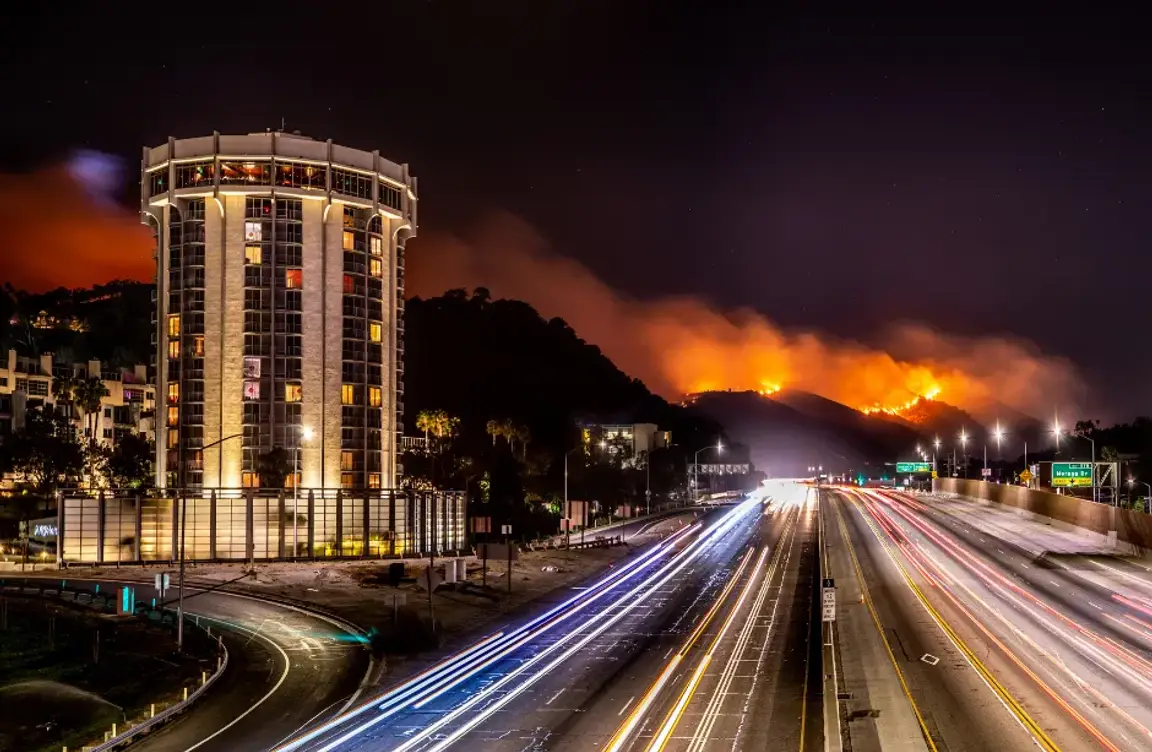
After a house fire in Los Angeles County, find safe housing, photograph everything, and open your insurance claim before any debris is moved. If the fire was part of a declared state of emergency, California gives you at least 24 months of living-expense coverage and 36 months to collect full replacement cost, so the rebuild-or-sell decision can wait.
The Short Version
- Open the insurance claim, photograph every room, and save receipts for every night away from home before anything is cleaned or hauled off.
- After a fire in a declared state of emergency, California requires at least 24 months of additional living expense coverage and at least 36 months to collect full replacement cost, with extensions for delays outside the homeowner’s control.
- Since January 2026, SB 495 requires California insurers to pay at least 60% of contents coverage, up to $350,000, without an itemized inventory after a total loss in a declared emergency.
- California homeowners can use replacement-cost benefits to rebuild or buy a home somewhere else, and Prop 19 lets disaster victims who sell the damaged home carry their property tax base to a replacement anywhere in the state.
- Rebuilding fits when insurance covers the real cost and the family wants that address back. Selling fits when the payout falls short, the timeline doesn’t work, or starting over somewhere else feels right.
A house fire can be over in an afternoon. Everything after it, the claim, the cleanup, the permits, and the question of whether you even want to go back, can take a year or longer, and most of it lands on you while you’re living out of a hotel or a relative’s spare room.
If that’s where you are right now, we’re so sorry, and we would feel the exact same way in your position.
California law gives fire survivors more time and more protection than most people realize, and knowing those rules early changes what you do in the first few weeks. What follows is what happens next in Los Angeles County, in the order it usually happens, including the parts that have nothing to do with selling.
The First Week Matters Most for Your Insurance Claim
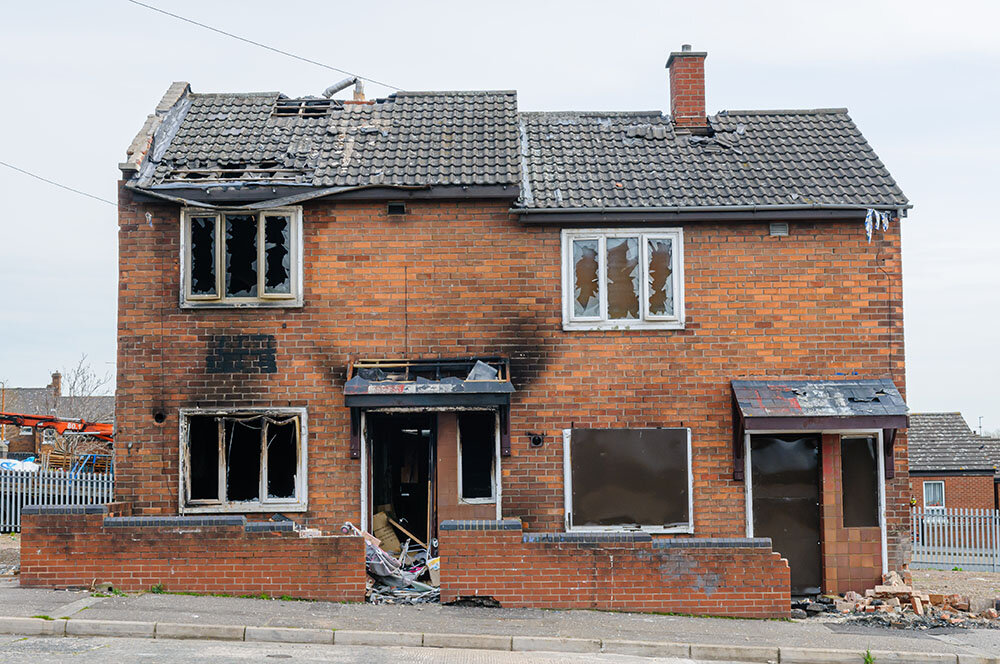
The most important thing you can do in the first week is protect your insurance claim, and that starts with documenting the damage before anything is moved.
- Stay out until the fire department or a building inspector says the structure is safe to enter.
- Photograph and video every room, every wall, and the outside of the house, including things that look fine, because smoke and heat damage aren’t always visible.
- Call your insurer, open the claim, and get the claim number and your adjuster’s name in writing.
- Ask for a complete certified copy of your policy, including the declarations page.
- Keep every receipt for hotels, meals, gas, clothing, and toiletries.
- Hold on to damaged belongings until the adjuster has seen them or signed off in writing.
Write down every phone call with the date, who you talked to, and what they said. It feels like overkill in week one, and it’s the thing people wish they had in month nine, when an adjuster has changed and nobody remembers what was promised.
If an adjuster’s number looks low, you’re allowed to get your own contractor’s estimate and push back with it.
United Policyholders, a California nonprofit, publishes free claim guides and roadmaps for fire survivors, and everything it puts out is written from the homeowner’s side of the claim. A licensed public adjuster is another option. They work for you instead of the insurance company and are paid a percentage of what you recover, so confirm the license with the California Department of Insurance before you sign anything.
What California Law Says Your Insurer Owes You
California gives fire survivors specific protections in the Insurance Code, and the strongest ones apply when the fire is part of a declared state of emergency, like the January 2025 Eaton and Palisades fires in Los Angeles County. The Department of Insurance lists these rules in its annual notice to policyholders, and it’s worth printing a copy for your claim file.
| Protection | What California requires in a declared emergency | Where it comes from |
| Additional living expenses | At least 24 months, plus up to 12 more for delays outside your control | Insurance Code §2060 |
| Advance on living expenses after a total loss | At least four months, paid on request | Insurance Code §2061 |
| Time to collect full replacement cost | At least 36 months from the first payment, with 6-month extensions for good cause | Insurance Code §2051.5(b) |
| Contents paid without an itemized inventory | At least 60% of contents coverage, up to $350,000, after a total loss | SB 495, in effect since January 2026 |
| Dwelling limit too low to rebuild | You can combine dwelling and other-structures limits | Insurance Code §10103.7(a) |
The contents change matters more than it sounds. Before 2026, a family that lost everything could be asked to list every fork and sweater from memory within 60 days, and under SB 495 an insurer now has to wait at least 100 days before it can require a detailed inventory after a total loss in a declared emergency.
Outside a declared emergency, like a kitchen fire in a single house in Downey or Compton, your own policy decides how long living expenses last, and the minimum window to collect replacement cost is 12 months from the first payment instead of 36. The Loss of Use section of your policy is the first page to read.
Debris and Asbestos Come Before Any Rebuild
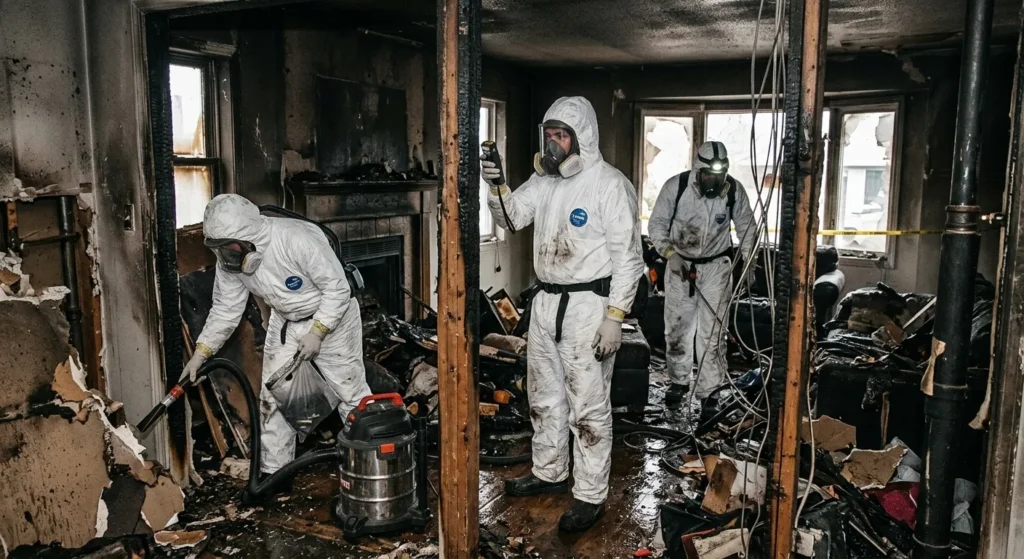
Nothing gets rebuilt in Los Angeles County until the burned material is tested and removed, and for older homes that usually starts with an asbestos survey.
The South Coast Air Quality Management District, which covers most of urban Los Angeles County, requires an asbestos survey before demolition or renovation of a building damaged by a fire, even when the work is urgent, and homes built before 1984 are the ones most likely to contain it. That survey, and any abatement it turns up, has to happen before a contractor can start clearing the site.
Mrs. Property Solutions bought a fire-damaged rental condo in Palmdale that shows how long this stage can take. The owner, Frank, had relatives living in the unit when the fire hit, and two insurance companies argued over the claim for about a year before it settled.
Because the condo was built in 1979, a HazMat crew in white suits and masks had to strip every contaminated material before workers could even go inside, and by the time they finished the unit was down to the studs. The sale itself took about 19 days, and the year of insurance back-and-forth and hazardous cleanup before it is the part most owners don’t budget for, in time or in patience.
Ask your adjuster early where debris removal is paid from, because some policies cover it separately from the dwelling limit and some don’t.
How Rebuilding Works in Los Angeles
Rebuilding runs through the Los Angeles Department of Building and Safety inside city limits, or through Los Angeles County in unincorporated areas like Altadena, and how fast it moves depends on whether your fire was part of a declared disaster.
For homes lost in the Palisades Fire, the City of Los Angeles allows a like-for-like rebuild up to 110% of the original footprint and height without Coastal Act, environmental, or Mello Act review, according to the city’s Palisades rebuild FAQ from January 2026. A house damaged in an ordinary structure fire elsewhere in the city goes through regular plan check, with no emergency shortcut.
Whoever builds it has to be licensed. The Contractors State License Board requires a licensed contractor for any job of $1,000 or more in labor and materials, treats contracting without a license in a declared disaster area as a felony, and advises never paying more than 10% or $1,000 down, whichever is less.
Get three bids, get a written contract, and look up every license yourself. Check whether your policy includes building code upgrade coverage, sometimes called ordinance or law coverage, because a rebuild has to meet today’s code and older homes rarely do.
Your property taxes while you rebuild
Your property tax bill can go down while the house is damaged. The Los Angeles County Assessor offers misfortune and calamity relief when a fire causes at least $10,000 in damage, and the claim has to be filed within 12 months of the fire.
When you rebuild, a replacement that costs up to 120% of what was there keeps your old base year value, and only the amount above 120% gets added. That 120% cushion leaves some room to rebuild a little larger, or up to today’s code, without a jump in your tax bill.
Can You Take the Insurance Money and Buy Somewhere Else?
Yes, California lets you rebuild or replace your home at a different location and still collect replacement cost, as long as you stay within your policy limits and time frames. Under Insurance Code section 2051.5(c), the payout is measured by what it would have cost to rebuild at your original address. The insurer can’t deduct the value of the land at the new location, and you can’t collect more than rebuilding the original would have cost.
Your property tax base can move with you too. The Board of Equalization’s Prop 19 guide says that when a wildfire or other Governor-declared disaster damages more than 50% of a home’s value, the owner can sell the damaged home and transfer its taxable value to a replacement anywhere in California, bought or built within two years of that sale. If the replacement is worth more, the difference is added to the transferred value.
Put together, those rules mean a family can sell the damaged property, use replacement-cost benefits toward another home, and keep a lower tax base, all without rebuilding. Before you count on any of it, get your insurer’s answer in writing and call the county assessor with your specific address.
Rebuild or Sell: How to Decide
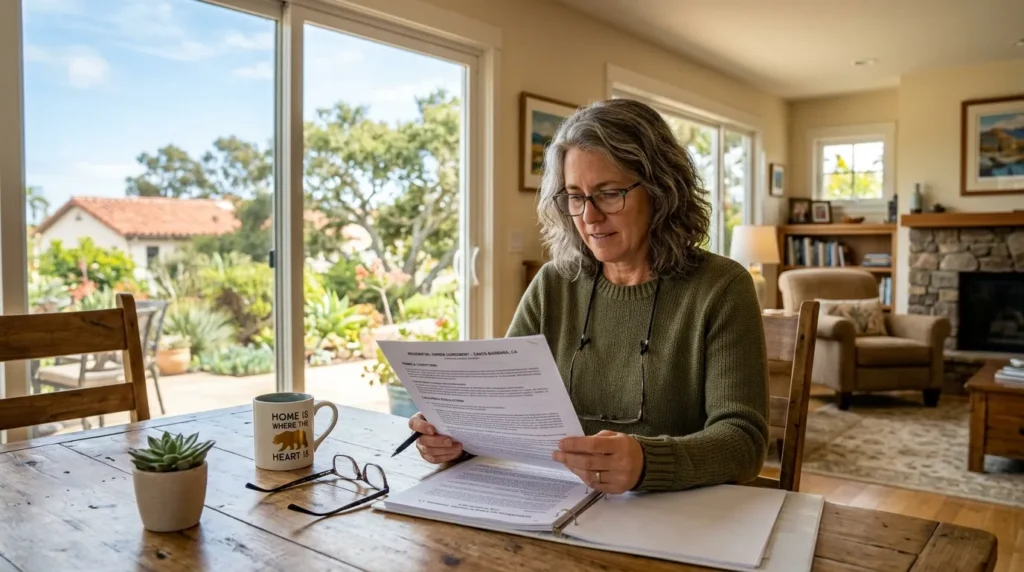
Rebuilding makes sense when the insurance covers the true cost and your family wants to go home, and selling makes more sense when the numbers or the timeline don’t fit the life you have right now.
| Path | Works best when | Watch out for |
| Rebuild with insurance | The payout covers the contractor’s bid and you can live elsewhere through construction | Underinsurance, living-expense coverage running out before move-in, contractor schedules |
| Replace elsewhere and keep the claim | You don’t want to go back but want your replacement-cost benefits | Section 2051.5 time limits and getting the insurer’s confirmation in writing |
| List the house or lot with an agent | Builders or buyers who can wait would pay more for the lot or the structure | A 5% to 6% commission, longer time on market, and buyers who can’t get a loan on an unlivable home |
| Sell as-is to a cash buyer | You want a fixed closing date and no repairs more than the last dollar | The price reflects the damage and the buyer’s risk, so compare more than one offer |
| Hold and wait | The neighborhood is rebuilding and you can carry the mortgage, taxes, and insurance | Carrying costs, an empty property, and trespassers |
The commission line is worth running with your own numbers. On a property that sells for $600,000, a 5% to 6% commission is $30,000 to $36,000, and that has to be weighed against a lower as-is price with no commission.
A cash sale is the wrong choice if your insurance covers the rebuild, you have somewhere stable to live while it happens, and you want to be back at that address. It’s also the wrong choice if you’re deciding in the first few weeks, before you know what your claim is worth, because waiting costs you less than selling early. Mrs. Property Solutions works from one rule, that every homeowner should leave the conversation in a better situation than before, even when that means not selling at all.
Some families don’t want to walk back into that house, and that’s a real reason too.
Unsolicited Offers in 2025 Fire ZIP Codes Are Restricted Until 2027
If your home is in one of the ZIP codes hit by the January 2025 fires, California’s AB 851 bars anyone from making you an unsolicited offer to buy it until the law expires on January 1, 2027.
The law covers 15 ZIP codes in the Los Angeles and Ventura County fire areas, including 90272 in Pacific Palisades and 91001 in Altadena, and it builds on the Governor’s 2025 executive orders that barred unsolicited offers below a home’s January 6, 2025 value.Under AB 851, buyer and seller have to sign a written attestation, recorded with the deed, that the sale didn’t start with an unsolicited offer, and a seller can cancel a deal made in violation for up to four months after signing.
If someone you never contacted calls, texts, or mails you an offer, you can report it to the Department of Real Estate or the California Attorney General.
Selling a Fire-Damaged Home Means Disclosing the Fire
California sellers have to disclose known fire damage, and selling as-is doesn’t change that.
The state’s Transfer Disclosure Statement asks directly about major damage from fire, earthquake, floods, or landslides, and the form is separate from any as-is language in the purchase contract. Keep your claim file, the adjuster’s reports, and any asbestos survey together, because a buyer will ask for them and they make the disclosure easy to back up.
This guide to disclosure when selling as-is covers the forms in more detail. If your claim is still open, ask your insurer in writing what happens to any remaining dwelling benefits after a sale, before you sign a purchase agreement.
A burned house that sits empty also needs watching. In Compton, squatters moved into a fire-damaged home before its owner was able to sell, which turned a hard year into a harder one, and these steps for securing an empty house are worth taking the week the house goes vacant.
For the selling side in more depth, see how selling with fire damage compares to fixing first, and what selling without making repairs looks like in Los Angeles.
If You’re Leaning Toward Selling
If you’ve read this far, you probably have a claim number, a stack of receipts, and one question you keep coming back to, which is whether you want to go back at all.
Mrs. Property Solutions is a local, mom-and-pop cash home buyer in Los Angeles County, and we buy fire-damaged homes as-is, so you don’t have to deal with the cleanup, the rebuild, or a contractor parade. We’ve been doing this since 2016, we’ve bought 150+ homes, we have 50+ five-star reviews, you don’t pay a commission, and the offer we make is the offer we honor, with no renegotiating after the deposit is in escrow. You choose the closing date, and it can be as fast as 14 days.
Call us at (626) 344-9579 or read how we buy homes that need repairs for homeowners across Los Angeles County, and we’ll walk through your numbers with you, including whether rebuilding makes more sense.
There’s no obligation, and if the math says rebuild, we’ll tell you that.
Frequently Asked Questions
How long does insurance pay living expenses after a fire in California?
At least 24 months when the fire is part of a declared state of emergency, under California Insurance Code section 2060, with up to 12 more months when delays are outside your control. After a total loss in a declared emergency, you can also ask for at least four months of living expenses in advance.
Do I have to list everything I lost to get paid for my belongings?
Not right away after a total loss in a declared emergency. Since January 2026, California’s SB 495 requires insurers to pay at least 60% of your contents coverage, up to $350,000, without an itemized inventory, and gives you at least 100 days before a detailed list can be required.
Can I use my insurance money to buy a different home instead of rebuilding?
Yes. California Insurance Code section 2051.5 lets you rebuild or replace your home at another location and still collect replacement cost, measured by what rebuilding at your original address would have cost. The insurer can’t deduct land value at the new location. Get your insurer’s confirmation in writing first.
Will my property taxes go up if I rebuild after a fire in Los Angeles County?
Usually not. If the rebuilt home costs no more than 120% of what was there, Los Angeles County restores your previous base year value and adds only the amount above 120%. You may also qualify for a temporary reduction by filing a misfortune and calamity claim within 12 months of the fire.
Do I have to disclose fire damage when I sell a house in California?
Yes. The California Transfer Disclosure Statement asks directly about major damage from fire, and an as-is sale doesn’t remove the duty to disclose known material facts. Sharing insurance reports, repair records, and any asbestos survey helps the buyer see the full history and protects you after closing.
Is asbestos testing required before cleanup after a house fire?
Yes, in most of Los Angeles County. South Coast Air Quality Management District Rule 1403 requires an asbestos survey before demolition or renovation of a fire-damaged building, even when the work is urgent. Homes built before 1984 are the most likely to contain asbestos, so the survey usually comes before any debris is cleared.
Is it legal for companies to send me offers on my burned house?
It depends on the ZIP code. AB 851 bars unsolicited offers on homes in 15 ZIP codes affected by the January 2025 Los Angeles and Ventura County fires until January 1, 2027. Elsewhere, offers are legal, so compare several, check who the buyer is, and never sign under pressure.
Should I rebuild or sell after a house fire?
Rebuild if the insurance covers the contractor’s bid, your living-expense coverage lasts through construction, and your family wants that address back. Sell if the payout falls short or the timeline doesn’t fit, knowing California lets you apply replacement-cost benefits to another home and Prop 19 can carry your tax base.
Disclaimer: This article explains how insurance, property tax, and disclosure rules generally work after a house fire in California. It isn’t legal, tax, or insurance advice, and the details vary by policy, county, and situation. Talk to a California insurance attorney, a licensed public adjuster, or a CPA about your specific case.