

Selling a house as-is for cash in California means the buyer pays with their own money and takes the house in its current condition, so there are no repairs, no loan approval, and no lender appraisal to wait on. The seller still owes California’s required disclosures, and the price reflects the repair work the buyer takes on.
The Short Version
- An as-is cash sale removes repairs and lender approval from a California home sale, but it does not remove the seller’s legal duty to disclose known problems.
- A cash buyer prices an as-is house by starting from what it would be worth fixed, then subtracting repairs, holding costs, resale costs, and a profit margin.
- Skipping a 5% to 6% listing commission on a $946,950 house, the Los Angeles County median in August 2026, saves roughly $47,000 to $57,000, though the cash price itself is usually lower.
- A cash sale is usually the wrong choice for a California house in good condition when the seller has a couple of months to list it on the open market.
- Before signing with any cash buyer, check verified reviews, ask for proof of funds, and get in writing whether the price can change after inspection.
Most people who start looking into selling a house as-is for cash have already sat at a kitchen table with a contractor’s estimate, and the number was bigger than they expected. Sometimes it’s a roof or a foundation crack, and sometimes it’s a parent’s house that hasn’t been touched since the 1980s and is still full of everything they owned.
A cash sale can take that whole list off your plate, and for a lot of California homeowners it’s the right call. It also has a cost, and it isn’t right for every house, so it helps to know exactly how it works before anyone walks through the door with an offer.
The condition of the house changes who can buy it and how they pay, and that one fact drives everything else below.
As-Is Means No Repairs, Not No Disclosures

In California, selling a house as-is means you won’t make repairs or give repair credits, but you still have to tell the buyer about the problems you know about.
The Legislature wrote this into Civil Code section 1102.1, which says delivery of the Transfer Disclosure Statement “may not be waived in an ‘as is’ sale.” That rule traces back to a 1993 appeals court case, and it applies whether the buyer is paying cash or bringing a loan. A cash buyer who hands you a contract saying you can skip the disclosures is asking you to do something the statute doesn’t allow.
There are exceptions. Sales ordered by a probate court during the administration of an estate are exempt from the Transfer Disclosure Statement under Civil Code section 1102.2, along with some trustee sales and transfers between family members or co-owners.
So as-is shifts the repair work to the buyer, and nothing more than that. Our breakdown of which disclosure forms apply covers what goes on each one, and if you’re still deciding whether to sell as-is at all, our full as-is selling guide starts from that question.
How Does Selling a House As-Is to a Cash Buyer Work?
A cash sale in California follows the same basic path as any home sale, with the loan steps taken out.
- First contact. You share the address, the condition, and your timeline, by phone or through an online form.
- A walkthrough or photos. The buyer sees the house as it is, including the rooms you’d rather they didn’t. Point out every problem you know about here, because it becomes part of the price instead of a surprise later.
- A written offer. The offer should state the price, the closing date, who pays escrow and title fees, and how long any inspection period lasts.
- Escrow opens. A neutral escrow company holds the buyer’s deposit and the paperwork, and a title company searches for liens, unpaid taxes, or other claims against the property.
- Disclosures and signatures. You complete the required disclosure forms and sign the purchase agreement and closing documents, often remotely with a mobile notary.
- Closing. The buyer’s funds arrive in escrow, any mortgage or liens are paid off from the proceeds, the deed records with the county, and you receive the balance.
What’s missing from that list is the part that usually slows a traditional sale down. There’s no mortgage application, no lender appraisal, and no underwriter asking for one more bank statement two days before closing, and when a financed buyer’s loan is denied or the appraisal comes in low, the whole deal can reopen. A cash buyer who has already shown proof of funds takes the lender off the list of things that can go wrong.
Most of this can happen without you living nearby, which matters for the many California sellers handling a parent’s house from another state.
Cash Buyers Price an As-Is House Backward From Its Fixed-Up Value
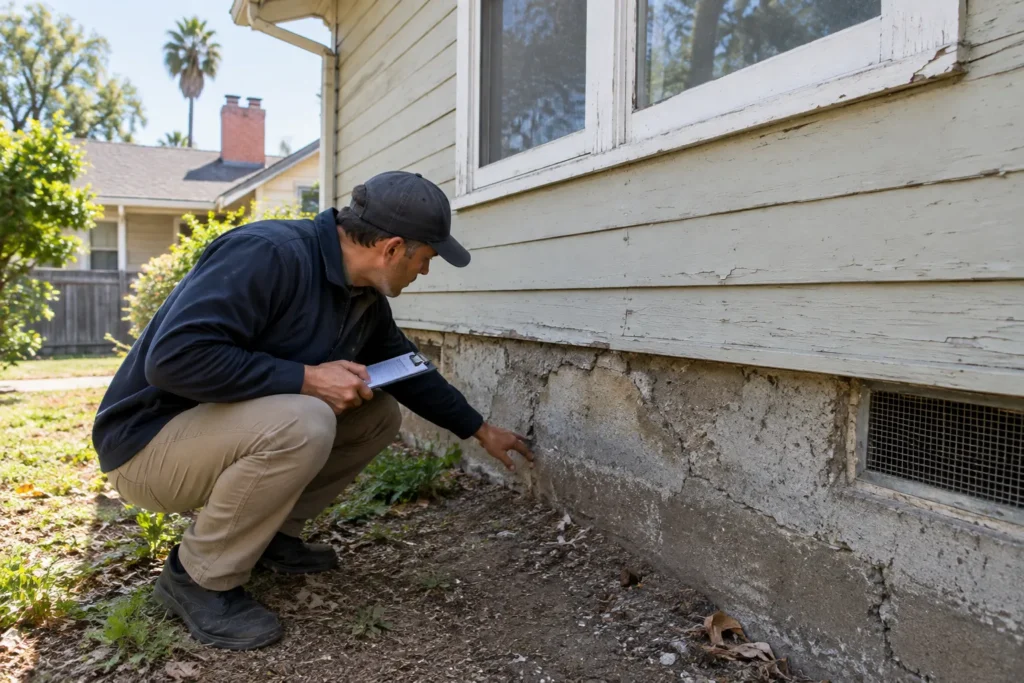
A cash buyer works backward from what the house would sell for after repairs, then subtracts the cost of getting it there.
That starting number is usually called the after-repair value, or ARV, and it comes from recent sales of fixed-up homes nearby. From there the buyer takes out the repair estimate, the months of property taxes, insurance, and utilities they’ll carry while the work gets done, the commission and closing costs they’ll pay when they resell, and a profit margin for the risk they’re taking on. What’s left is the offer.
This is why a cash offer on an as-is house comes in below a retail listing price, and any buyer who tells you otherwise isn’t being straight with you. The useful comparison is between that gap and what it would cost you to close it yourself, meaning the repairs, the commission, and the months of waiting.
One sale shows how this plays out. Two sisters living out of state inherited their father’s house in Burbank, and it had serious foundation problems, decades of his belongings still inside, and an estate tied up in probate. Mrs. Property Solutions bought it as-is with the foundation work and the full cleanout priced into the first offer, worked directly with their probate attorney, and closed in 21 days. The number on the final check matched the number on the original offer, because nothing about the house changed between the walkthrough and closing, and every problem had already been counted.
Pricing the condition before the contract is signed is what keeps the number from moving later.
What Skipping the Commission Saves in California
On a typical Los Angeles County house, skipping a 5% to 6% listing commission keeps about $47,000 to $57,000 out of the costs of the sale.
The California Association of Realtors reported a Los Angeles County median sale price of $946,950 in August 2026. At 5%, the commission on that price is $47,348, and at 6% it’s $56,817. A direct sale to a cash buyer has no listing agent, so that line comes off the settlement statement entirely.
Time has a cost too, even though it never shows up as one line. C.A.R. put the median California single-family home at 28 days on the market in August 2026, and that clock only runs until a buyer is found, before a financed buyer’s escrow even starts. Every month the house sits, you’re still paying the mortgage, property taxes, insurance, and utilities, and on a vacant house you’re also paying to keep it secure. For a house that needs work before it can even be listed, add the months the repairs take.
Closing costs are separate from commission. Escrow fees, title insurance, and the county documentary transfer tax exist in a cash sale just like in a listed sale, and who pays each one gets written into the purchase agreement, so ask for a seller’s net sheet that shows every line before you sign.
A fair comparison counts all of it, the commission, the repairs, the carrying costs, and the time, and puts that total next to the cash offer.
Can You Sell a House in Any Condition for Cash?

Yes, cash buyers regularly purchase California houses that a lender won’t finance, and the condition that turns away retail buyers is often the reason a cash buyer is interested at all.
Financed buyers are limited by their loan. An FHA loan, for example, requires the home to meet HUD’s minimum property requirements in HUD Handbook 4000.1, and a house with a failing roof, active leaks, or missing systems can stop that loan before it closes. A cash buyer answers to no lender, so the list of houses they’ll consider is much longer.
Houses that commonly sell for cash as-is include:
- Homes with fire, water, or mold damage, or a roof near the end of its life
- Hoarder houses and homes still full of a loved one’s belongings
- Inherited homes, including those still going through probate
- Rentals with tenants who won’t leave, or houses with squatters living inside
- Homes with unpermitted additions or open code violations
- Houses behind on property taxes or facing foreclosure
When a Cash Sale Is the Wrong Choice
A cash sale is usually the wrong move when the house is in good shape and you have a couple of months to sell, because the open market will almost always pay more for a home a buyer can move into and finance.
Here is how the three main paths compare for a California seller:
| Sell as-is for cash | List as-is on the MLS | Fix up, then list | |
| Repairs before sale | None | None, though financed buyers may ask for credits | You pay for them up front |
| Listing commission | None | Typically 5% to 6% | Typically 5% to 6% |
| Who can buy | Cash buyers and investors | Cash buyers, plus financed buyers if the house qualifies | Any buyer, including first-time buyers with loans |
| Price | Below retail, reflects the repairs | Market price for the current condition | Highest, if the work is done well |
| Timeline | Set by escrow and title work | Days on market plus escrow | Repair time, days on market, and escrow |
| Financing risk | None | Depends on the buyer | Depends on the buyer |
| Best when | Repairs are big, time is short, or you’re managing from far away | The house needs work but can still pass a lender’s review | Repairs are modest and you have the time and cash |
Listing as-is on the MLS is the middle road a lot of sellers skip. You still pay a commission, but the house is in front of every kind of buyer, and in a neighborhood with more buyers than listings that competition can close much of the price gap. Listing as-is on the MLS has its own trade-offs, including repair requests from financed buyers, that are worth knowing before you decide.
Fixing it up first makes sense when the work is mostly cosmetic, like paint, flooring, and fixtures, and you have the cash and the patience to manage contractors. The trade-offs of fixing first come down to how big the repair bill is compared with the price bump it buys.
And sometimes the right answer is not selling at all. Some families Mrs. Property Solutions has sat down with kept their homes through a loan modification or a forbearance plan and never sold. If repairs you can’t afford are the main thing standing in the way, our page on selling a house needing repairs walks through how that kind of sale works.
How to Check a Cash Buyer Before You Sign
The best check on any cash buyer is what past sellers say about them, backed by proof they can close.
Read reviews on Google and look for ones that describe an actual sale, a situation like yours, and a closing, not only praise for how friendly someone was. Ask for proof of funds, like a recent bank statement or a letter from their funding source, before you open escrow. Get the price, the closing date, and the inspection period in writing, and ask directly whether the price can change after the inspection. A buyer who has already walked the house and seen its problems should be able to answer that plainly.
If a notice of default has been recorded on the home you live in, California adds one more layer of protection. Under the Home Equity Sales Contract Act, you can cancel a sale to an equity purchaser until midnight of the fifth business day after you sign, or until 8 a.m. on the day of a scheduled foreclosure sale, whichever comes first, as set out in Civil Code section 1695.4.
For more on warning signs, see how to spot cash buyer red flags, and for how different kinds of buyers operate, the pros and cons of investors.
If a Cash Sale Fits Your Situation

If you’ve read this far, you probably have a house with a list of problems and a decision you’d like to make with real numbers in front of you.
Mrs. Property Solutions is a local, mom-and-pop cash home buyer in Los Angeles County that buys houses across Southern California in their current condition, so there are no repairs to make, no commission to pay, and nothing to clean out before you go. We’ll walk through the house with you, show you how we got to our number, and let you pick the closing date, and in most transactions we can close in as fast as 14 days.
Since 2016 · 150+ homes purchased · 50+ five-star reviews · Local to LA County · No repairs, no commissions · The offer we make is the offer we honor
Call or text us at (626) 344-9579, or request your cash offer online. If you’d rather keep your options open, our page on selling directly without an agent explains how a direct sale compares.
There’s no obligation to accept our offer, and if listing the house would put more money in your pocket, we’ll tell you that too.
Frequently Asked Questions
Do I have to give disclosures if I sell my house as-is for cash in California?
Yes. California Civil Code section 1102.1 says the Transfer Disclosure Statement may not be waived in an as-is sale, and that applies when the buyer pays cash. Some transfers are exempt, including sales ordered by a probate court during estate administration. Selling as-is only means the seller is not making repairs.
How fast can a cash buyer close on an as-is house in California?
Speed depends on escrow and title work rather than loan underwriting, because a cash sale has no mortgage approval or lender appraisal. Clearing liens, unpaid property taxes, or probate and trust paperwork can add time. When the title is clean, many California cash sales close within a few weeks, and the seller can often choose the date.
Will a cash buyer pay less than market value for my house?
Usually, yes. A cash buyer starts from the home’s value after repairs and subtracts repair costs, holding costs, resale costs, and profit. The fair comparison is your net from the cash offer against your net from listing after commission, repairs, and months of carrying costs, rather than the two sale prices side by side.
Who pays closing costs when I sell my house to a cash buyer?
Closing costs are negotiable in California and get written into the purchase agreement. Escrow fees, title insurance, and the county documentary transfer tax exist in a cash sale just as in a listed sale. Some cash buyers offer to cover part or all of them, so ask for a seller net sheet before signing anything.
Can a cash buyer back out after inspecting my house?
A cash buyer can cancel during any inspection or due diligence period the purchase agreement gives them. Read how many days that period lasts and whether the contract allows the price to change afterward. A buyer who has already walked through the house and seen its condition should be willing to put a firm price in writing.
Do I need a real estate agent to sell my house as-is for cash?
No. California homeowners can sell directly to a cash buyer without a listing agent, which is how the typical 5% to 6% commission is avoided. A licensed escrow company and a title company still handle the money and the deed. Some sellers hire a real estate attorney to review the purchase agreement, especially in probate or trust sales.
Does Mrs. Property Solutions buy houses as-is for cash?
Yes. Mrs. Property Solutions buys houses as-is for cash across Los Angeles County and Southern California, with no repairs and no commissions. The company has purchased 150+ homes since 2016, closes in as fast as 14 days in most transactions, and the offer it makes is the offer it honors at closing.