
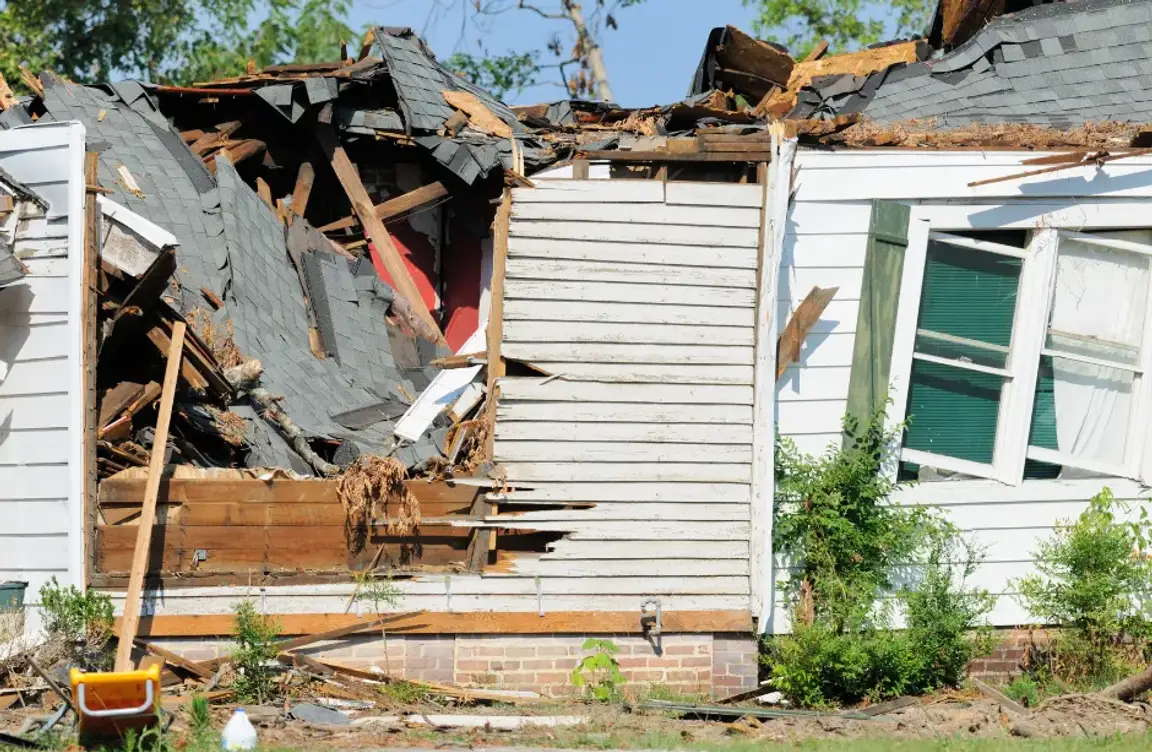
Yes, you can sell a house in California after earthquake damage. State law still requires disclosing known structural issues, whether you list it as-is or repair it first. The right move usually comes down to how bad the damage is, how much cash you have on hand, and how fast you need to close.
TLDR
- Selling a house with earthquake damage is legal in California, but state law requires disclosing known structural damage no matter how you sell.
- Minor repairs can be worth making if you have time and cash reserves, but structural work commonly runs $3,500 to $100,000 or more in the Los Angeles area, and lenders often won’t finance a home with unresolved damage.
- Homes sold with disclosed, unrepaired damage typically go for well below full market value, whether listed as-is or sold directly to a cash buyer.
- Standard homeowners insurance does not cover earthquake damage. Only a separate California Earthquake Authority policy does, and any claim details have to be disclosed to a buyer.
- Selling as-is to a cash buyer skips the financing contingency and the repair negotiations entirely, which is usually the fastest path when the damage is serious.
A crack that runs the length of a hallway ceiling looks a lot scarier than it usually is. So does a door that suddenly won’t latch right, or a chimney that’s leaning a little more than it used to. Most of what a homeowner notices after a shake turns out to be cosmetic. Some of it isn’t, and the hard part is that you usually can’t tell which is which just by looking at it.
California gets thousands of small earthquakes every year, and most of them do nothing more than rattle the dishes. Every so often, one is strong enough to leave real damage behind. Then a homeowner who was already thinking about selling, or who suddenly needs to, has to figure out what that damage means for a sale.
This guide walks through what you’re required to disclose, when repairing makes financial sense and when it doesn’t, how the damage affects a traditional listing, and what to know about insurance before you put the house on the market. For the broader picture on selling a home with serious damage of any kind, see our full pillar guide on selling a damaged or unsafe home in California.
Common Types of Earthquake Damage in California Homes
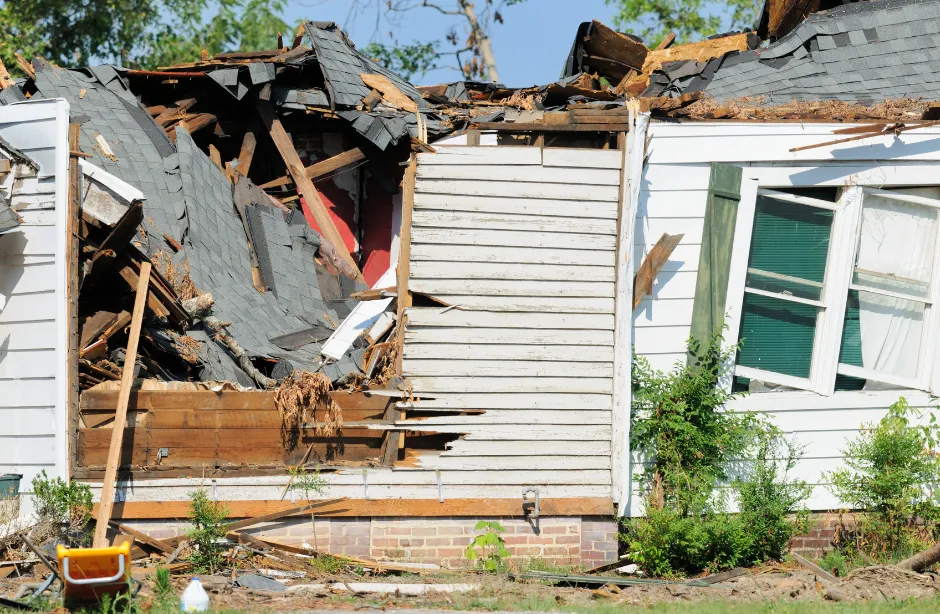
Earthquake damage rarely looks the same twice. It depends on the home’s foundation type, its age, the soil it sits on, and how close it is to whatever fault moved. Some damage shows up the day of the shake. Some doesn’t surface for months, after a door frame settles or a hairline crack finally works its way through paint.
The damage California sellers report most often includes:
- Foundation cracks or shifting
- Sloping or uneven floors
- Wall and ceiling cracks
- Chimney damage or partial collapse
- Roof separation or new leaks
- Broken gas or water lines
- Unstable retaining walls
- Framing damage inside walls that isn’t visible until an inspection
A home can have several of these at once and still be sellable. What changes is how you sell it and what you’re required to say about it.
Yes, You Can Sell a House With Earthquake Damage in California
Selling a home with earthquake damage is completely legal in California, no matter how extensive the damage is. There’s no condition threshold that takes a house off the market. What the law does require is honesty about what you know.
Under California Civil Code Section 1102, sellers of most one-to-four unit residential properties must give buyers a Transfer Disclosure Statement listing known material defects, including structural damage, before the sale closes. Selling “as-is” limits what repairs you’re agreeing to make.
It does not remove the disclosure requirement. A seller who knows about foundation cracking or wall separation and leaves it off the form is exposed to real consequences after closing, including a buyer lawsuit, financial damages, or in some cases the sale being unwound entirely.
What You Have to Disclose About Earthquake Damage
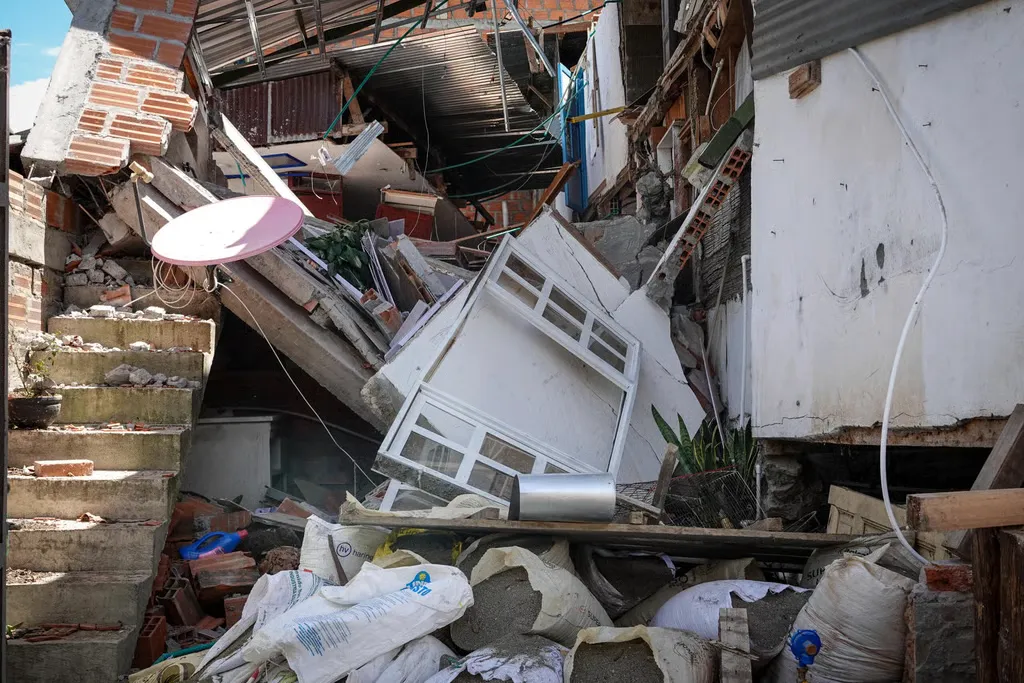
Two separate disclosures usually come into play, and sellers often only know about one of them.
The Transfer Disclosure Statement
The TDS asks you to check boxes and describe, in your own knowledge, things like known structural damage, cracking or movement you’ve noticed, any past inspection or engineering reports you have, and repairs you’ve made or been told you need. You’re only on the hook for what you know. You don’t have to hire an engineer just to fill out the form.
The Natural Hazard Disclosure
If the property sits inside a mapped earthquake fault zone, California Civil Code Section 1103 requires a separate Natural Hazard Disclosure Statement telling the buyer so. Fault zone mapping comes from the Alquist-Priolo Earthquake Fault Zoning Act, and the California Geological Survey is the agency that draws the lines.
The maps get updated regularly. As recently as November 2025, the Geological Survey released new fault zone maps covering several Los Angeles County cities, including Pasadena and Glendale, so a property that wasn’t in a mapped zone a few years ago can be now.
Should You Repair the Damage Before Selling, or Sell As-Is?
This is the decision most sellers get stuck on, and the honest answer is that it depends on the math more than the damage.
Repairing before you list can make sense if the damage is cosmetic, you’re planning to sell traditionally through an agent, and you have the time and cash reserves to see repairs through permitting. Cracked drywall, minor stucco cracking, and hairline foundation cracks that an inspector calls non-structural often fall into this category. A documented, permitted repair can also reassure a buyer’s lender during underwriting.
Repairing rarely pays off when the damage is structural, when engineering reports and permits are required, or when you need to sell on a shorter timeline. According to contractor cost data from Angi, earthquake damage repairs nationally range from about $2,000 to $60,000, with most homeowners landing around $25,000.
Los Angeles-specific data runs higher for anything beyond basic foundation bolting: standard retrofits average $3,500 to $7,000, cripple wall bracing runs $5,000 to $12,000, and soft-story reinforcement on a garage-level home can reach $20,000 to $100,000 or more. Buyers, lenders, and appraisers almost always price in more caution than the repair estimate itself, because nobody wants to inherit an unknown.
Structural cracking sits in the same category as a house with foundation problems, which walks through the repair-versus-sell math in more depth if that’s the situation you’re facing.
How Earthquake Damage Complicates a Traditional MLS Sale
Listing a home with unresolved earthquake damage on the MLS is legal, but it puts most of the friction on the buyer’s side of the transaction, not yours.
Most buyers finance through a mortgage, and HUD’s minimum property standards require an FHA-insured home to be structurally sound before the loan can close. An appraiser who flags foundation cracking or framing damage can stop an FHA or conventional loan in its tracks until repairs are made, which means a buyer who loved the house on the first walkthrough may not be able to close on it at all.
Even a buyer with cash or unusually flexible financing will often ask for a structural engineer’s report once damage is disclosed, and that report can take weeks to schedule during a busy season.
None of this makes a traditional sale impossible. It just means the pool of buyers who can close narrows fast once real damage is on the table, and the ones who remain tend to negotiate hard.
Selling As-Is Skips Most of That Friction
Selling as-is means the buyer accepts the home in its current condition, you make no repairs, and you still provide full disclosure of everything you know. It’s not a way around the paperwork. It’s a way around the repair negotiation.
This approach tends to work best with cash buyers and investors who factor earthquake damage into their offer up front instead of discovering it during an inspection contingency and renegotiating. Because there’s no lender involved, there’s no appraisal that can kill the deal over foundation cracking, and no FHA minimum property standard to satisfy before closing.
How Much Less Does an Earthquake-Damaged House Sell For?
Standard homeowners insurance in California does not cover earthquake damage. It’s one of the more common surprises sellers run into. Coverage only applies if you separately purchased an earthquake policy, most commonly through the California Earthquake Authority.
If you filed a claim, a few things matter for the sale. The insurer may have required certain repairs as a condition of the payout. Your claim history can affect how a buyer or their lender views the property, even after repairs are made.
And if you received a settlement but haven’t used it to repair the damage, that has to be disclosed just like the damage itself. None of this stops a sale. It just means the paperwork trail matters as much as the physical repairs do.
What to Know About Insurance Before You Sell

Standard homeowners insurance in California does not cover earthquake damage. It’s one of the more common surprises sellers run into. Coverage only applies if you separately purchased an earthquake policy, most commonly through the California Earthquake Authority.
If you filed a claim, a few things matter for the sale. The insurer may have required certain repairs as a condition of the payout. Your claim history can affect how a buyer or their lender views the property, even after repairs are made.
And if you received a settlement but haven’t used it to repair the damage, that has to be disclosed just like the damage itself. None of this stops a sale. It just means the paperwork trail matters as much as the physical repairs do.
When Selling Makes the Most Sense
Selling, rather than repairing and holding, tends to be the better move when the repair cost is financially overwhelming relative to what the home is worth, when there are multiple unrelated issues layered on top of the earthquake damage, when a timeline or a move makes waiting for permits and contractors unworkable, or when the property was inherited and nobody involved wants to manage a rebuild from a distance.
None of that means repairing is the wrong choice for every seller. If the damage is limited, you have time, and the neighborhood supports a strong resale price after repairs, listing traditionally after fixing the property can put more money in your pocket. This decision is about matching the path to your actual timeline and budget, not about which option sounds more responsible.
If you’re leaning toward selling as-is instead of repairing, Mrs. Property Solutions and other cash buyers specialize in exactly this kind of property, and our page on how repair-heavy houses get sold in California walks through how that process works in more detail.
If you’ve read this far, you’re probably somewhere in the middle of this decision. Repairing an earthquake-damaged house takes money and time most homeowners weren’t planning to spend, and listing it traditionally means finding a buyer whose lender will approve the loan.
Mrs. Property Solutions buys homes across Los Angeles County and Southern California in as-is condition, including houses with earthquake damage, foundation issues, and other structural problems. We’ve purchased 150+ homes since 2016, we’re rated 50+ five-star reviews, and we can typically close in as fast as 14 days. There are no repairs to make, no financing contingency to survive, and the offer we make is the offer we honor at closing.
If you want to know what your house is worth in its current condition, you can get a no-obligation cash offer here or call (626) 344-9579. There’s no pressure either way, even if selling to us isn’t the right fit for your situation.
Frequently Asked Questions
Do I have to disclose earthquake damage even if I’m selling the house as-is?
Yes. Selling as-is limits your obligation to make repairs, but it does not remove your legal duty to disclose known material defects. California Civil Code Section 1102 requires the Transfer Disclosure Statement in nearly every residential sale, regardless of condition or sale method.
What happens if I don’t disclose known earthquake damage?
A buyer who discovers undisclosed, known damage after closing can sue for damages, and in some cases the court can rescind the sale entirely. California courts have consistently held that “as-is” language does not excuse a seller from disclosing defects they knew about.
Do I need a structural engineer’s report before I sell?
Not by law. An engineer’s report isn’t required to list or sell a house. In practice, buyers financing through a mortgage or negotiating a repair credit often request one once damage is disclosed, so having a report ready can speed up negotiations.
Is my Los Angeles County home automatically in an earthquake fault zone?
Not automatically. Fault zone mapping is specific to each property and is maintained by the California Geological Survey under the Alquist-Priolo Act. Many Los Angeles County parcels fall outside mapped zones even in cities near active faults, so the disclosure depends on your exact address.
Can I still sell if my earthquake insurance claim hasn’t settled yet?
Yes, but you’ll need to disclose the open claim and whatever the insurer has determined so far. An unresolved claim can complicate financing for a traditional buyer, which is part of why some sellers in this situation choose a cash sale instead.
Will earthquake damage show up in a title search or public record?
Sometimes. Permits pulled for repairs, red tags, or code violation notices become part of the public record and can surface in a title search. Damage that was never reported to the city typically won’t appear there, which is exactly why the seller disclosure requirement exists.
How long after an earthquake do I have to disclose the damage?
There’s no expiration date on the disclosure requirement. As long as you know about the damage at the time you sell, whether it happened last month or five years ago, it belongs on the Transfer Disclosure Statement, along with any repairs made or recommended since.
Is a cash offer on an earthquake-damaged home automatically a lowball?
Not automatically. Cash buyers price in repair cost, holding costs, and the risk of unknown damage, the same math a traditional buyer’s inspection would eventually surface anyway. The trade-off is speed and certainty against a potentially higher price from a financed buyer willing to wait months for repairs and approval.
Disclaimer: This article explains how earthquake damage disclosure and sale options generally work in California. It isn’t legal or tax advice, and rules can vary by county and by situation. Talk to a real estate attorney about your specific case, especially if a claim, an inspection, or a fault zone designation is already in play.
Helpful Resources
- Selling without a realtor
- Should You Fix a Leaking Roof Before Selling?
- How to Sell a House With Mold or Water Damage Fast in California
- How to Sell a House with Code Violations in Los Angeles
- How to Secure a Vacant Property in California
- Should You Fix Code Violations Before Selling?
- How to Sell a Vacant House Fast in California